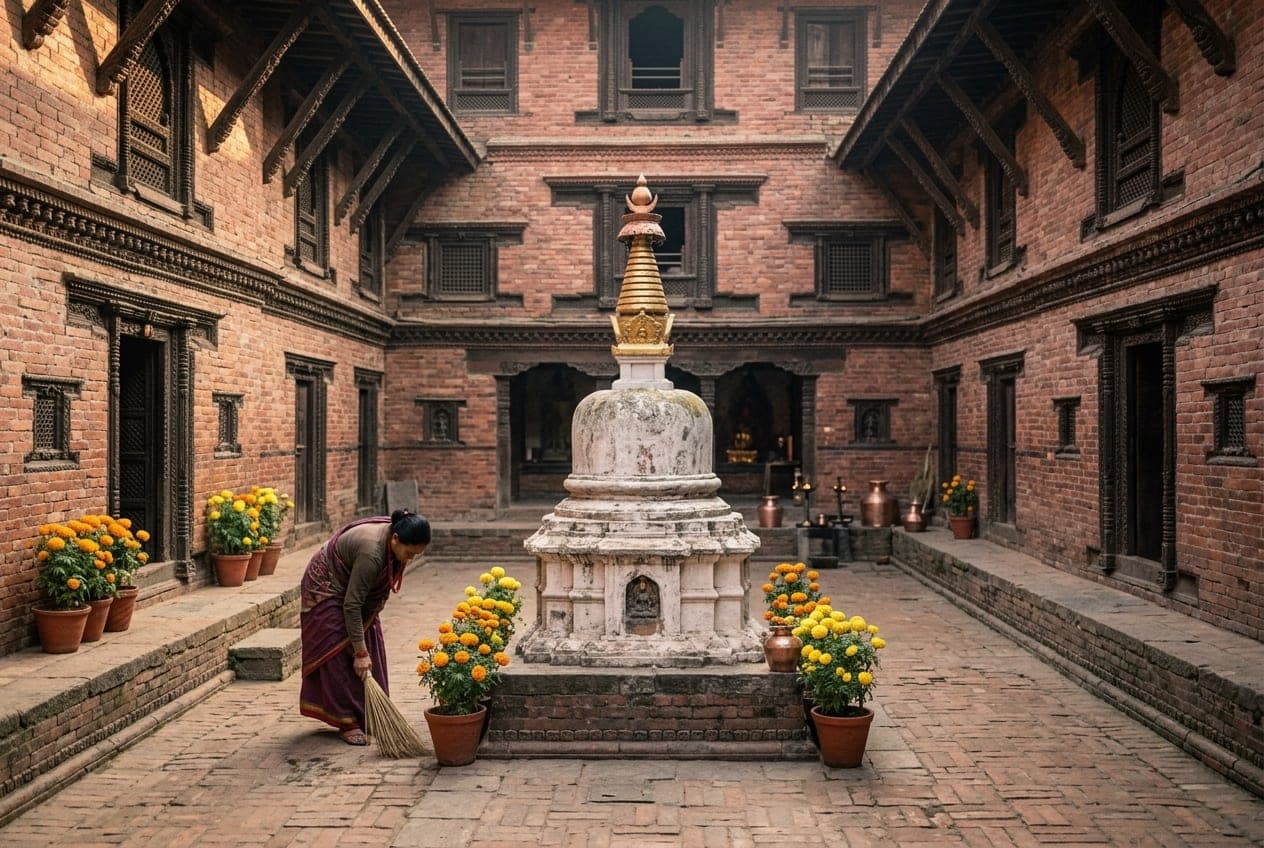
Chitwan National Park lies in Nepal's southern lowlands, the Terai, a 5–6 hour drive south-west of Kathmandu. Instead of Himalayan peaks you get sal forest, tall grassland and slow, wide rivers, at under 200 m above sea level in most of the park. The Tharu people have lived in and around these forests for centuries, and many families in the villages near Sauraha still keep mud-walled houses and painted grain stores.
What you can see
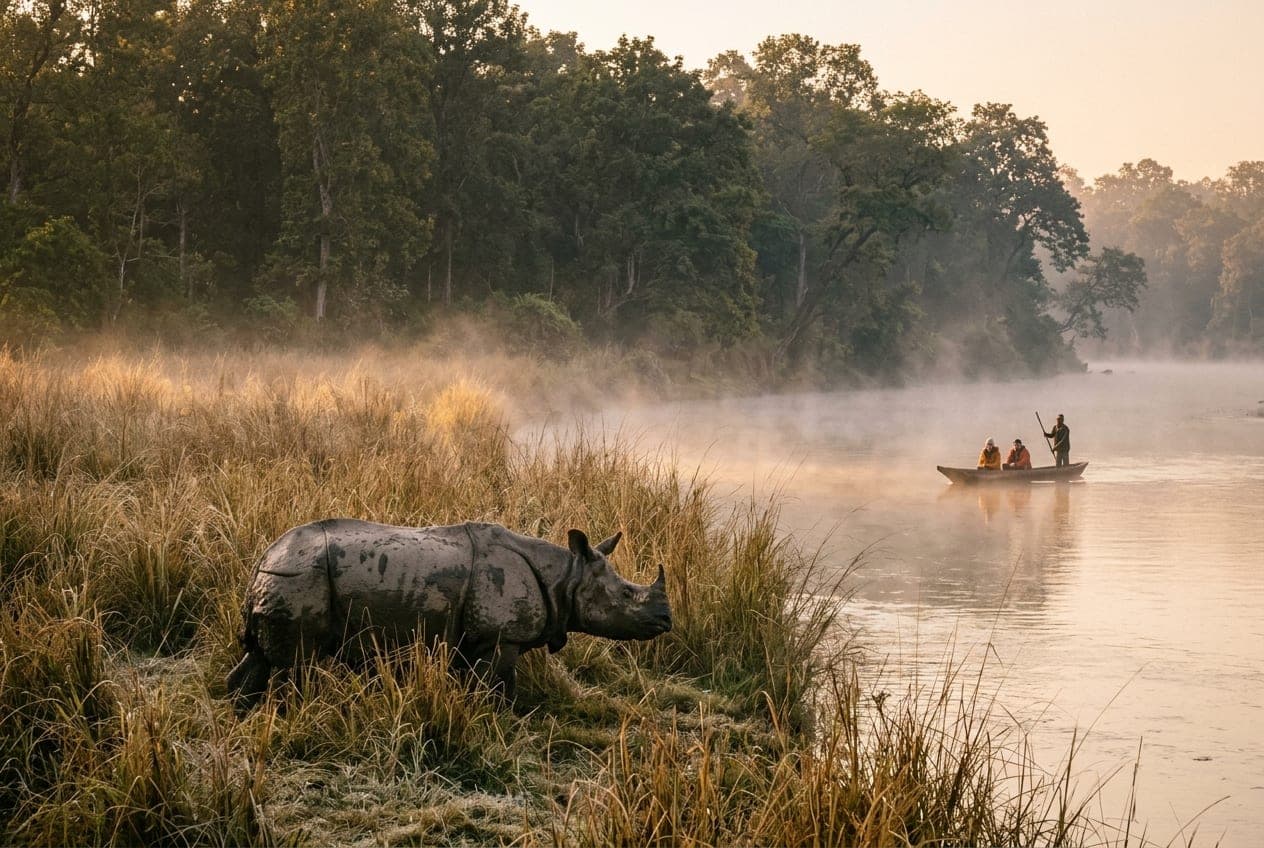
Chitwan was Nepal's first national park, set up in 1973, and has been a UNESCO World Heritage Site since 1984. It's best known for the greater one-horned rhino: the 2021 count found 752 in the park, after the population came close to dying out in the 1960s. The rivers hold mugger crocodiles and the rare gharial, and the forest has spotted deer, sambar, wild boar, sloth bears and more than 500 recorded bird species. Bengal tigers live here too, but they're shy and rarely seen.
Wildlife is wild. Rhino sightings are common but never guaranteed, and how much you see depends on the season, the weather and luck.
Our Chitwan safari
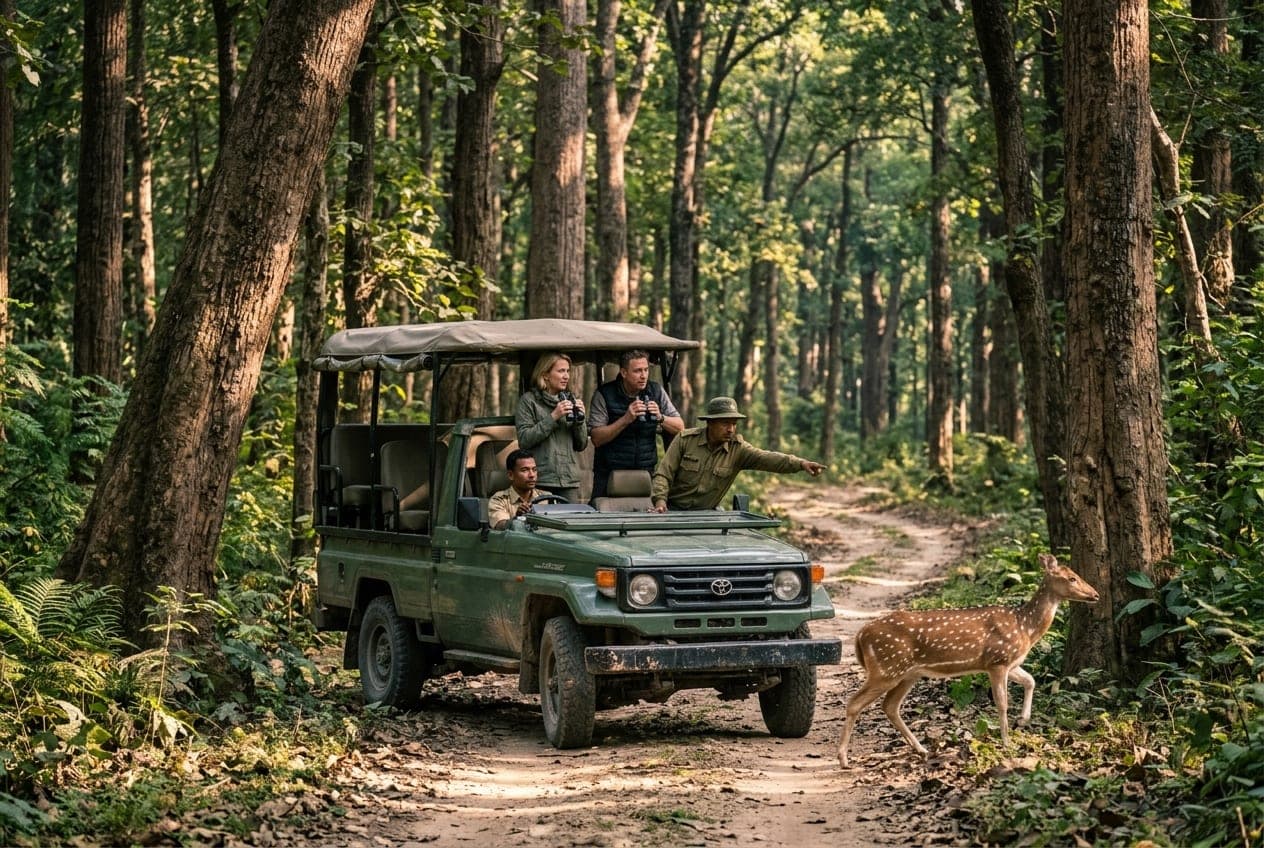
Our Chitwan Jungle Safari is three days and two nights. Days 1 and 3 are mostly travel: the tourist bus between Kathmandu and Sauraha takes 5–6 hours each way. Day 2 is the full park day: a dugout canoe on the Rapti river early in the morning, a guided walk through forest and grassland, and a jeep safari of 3–4 hours into the park in the afternoon. On the first evening there's a Tharu cultural programme with music and the stick dance, and on the last morning a short bird walk.
A naturalist guide leads every activity, and the park entry fees, a lodge in Sauraha and all meals in Chitwan are included. Sauraha, where you stay, is a small town on the park's northern edge, with lodges, cafés and Tharu villages around it. If you'd like more time in the park, ask us about adding a night for a longer jeep safari.
No elephant rides
We don't offer elephant rides or elephant bathing, for the animals' welfare. The canoe, the jeep and a walk with a naturalist get you close enough to the wildlife.
Combining Chitwan with other trips
Chitwan fits well after a trek or at the end of a trip. It's a 5–6 hour drive from Kathmandu or Pokhara, or a short flight to Bharatpur. Many people pair it with a trek in the Himalaya or a few days on a Kathmandu Valley heritage tour.
Jungle safari journeys
Chitwan Jungle Safari
Best time to go
October to March is the most comfortable time: dry, mild days and cool, often misty mornings. In late January or February local people are allowed into the park for a short period to cut the tall grass, which opens up the views.
April to early June is hot, often over 35 °C, but animals gather near water and sightings can be good. During the monsoon (June to mid-September) heavy rain floods parts of the park, and some activities may not run.
What to expect
Expect early mornings, because animals are most active at dawn and dusk. The middle of the day is for lunch and rest at the lodge. The jungle walk is on flat ground, but you walk quietly in single file and follow your naturalist's instructions.
Bring neutral-coloured clothes, insect repellent, a hat, sunscreen and binoculars if you have them. Lodges in Sauraha are simple, and all meals in Chitwan are included.
Who it's for
Almost anyone: families with children, older travellers, photographers and birdwatchers. There's no altitude and little walking beyond the jungle walk.
It's a good change of pace after mountains or temples. If you're short of time, remember that two of the three days are travel days.
Frequently asked questions
Rhino sightings are common but never guaranteed. More than 700 rhinos live in the park (752 at the 2021 count), and the canoe trip and jeep safari give you good chances. Tigers are shy and rarely seen.
No. We don't offer elephant rides or elephant bathing, for the animals' welfare. Jeep, canoe and walking safaris get you close enough to the wildlife.
Our safari includes the tourist bus between Kathmandu and Sauraha, 5–6 hours each way. A private car is faster and more flexible (ask us for a price), and there are short flights from Kathmandu to Bharatpur, about 30 minutes' drive from Sauraha.
Walks are led by experienced naturalists, in small groups, and follow the park's rules. You get a briefing on what to do if you meet a rhino, elephant or sloth bear. The risk can't be zero with wild animals, but following your guide's instructions keeps it low.
Two nights gives you one full day in the park, which is enough for a canoe trip, a jungle walk and a jeep safari. A third night allows a longer jeep safari deeper into the park, or a quieter day for birdwatching.