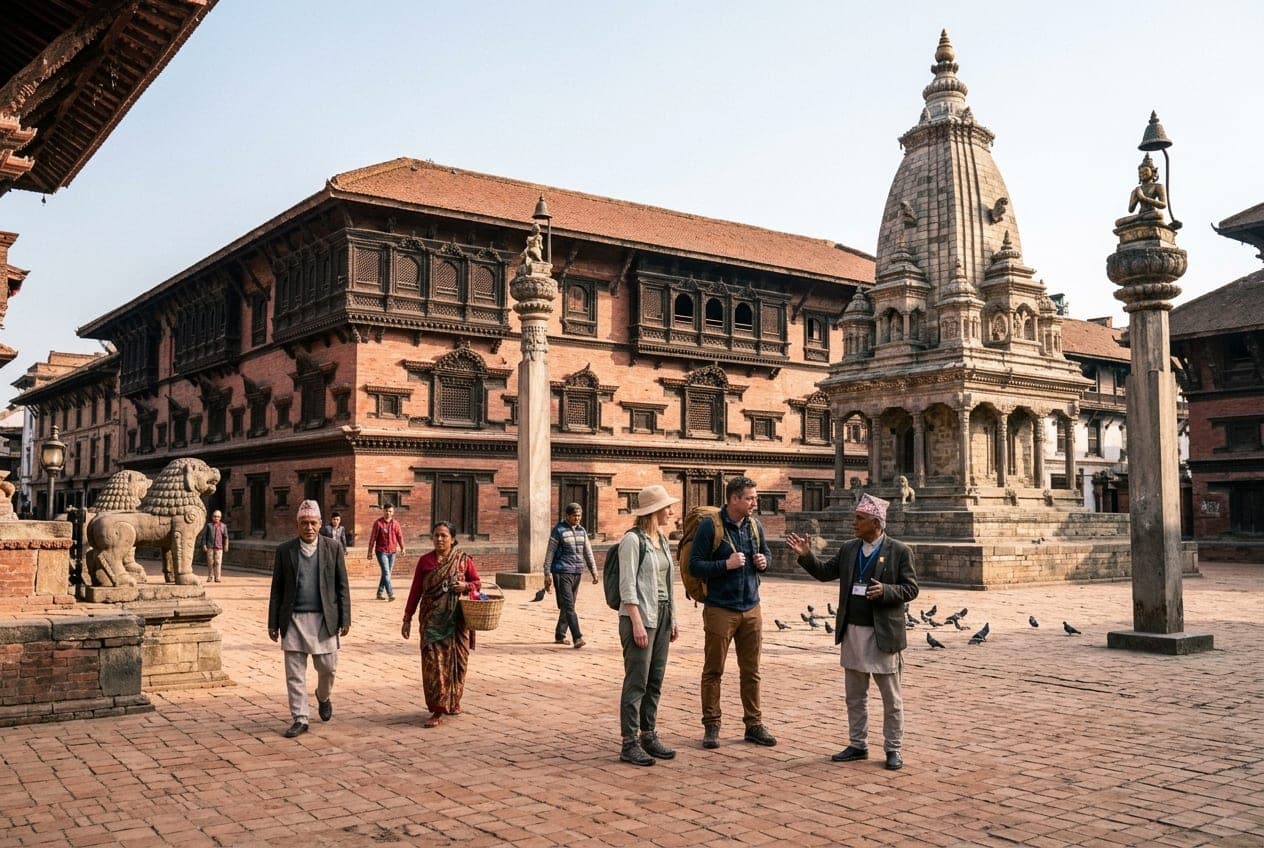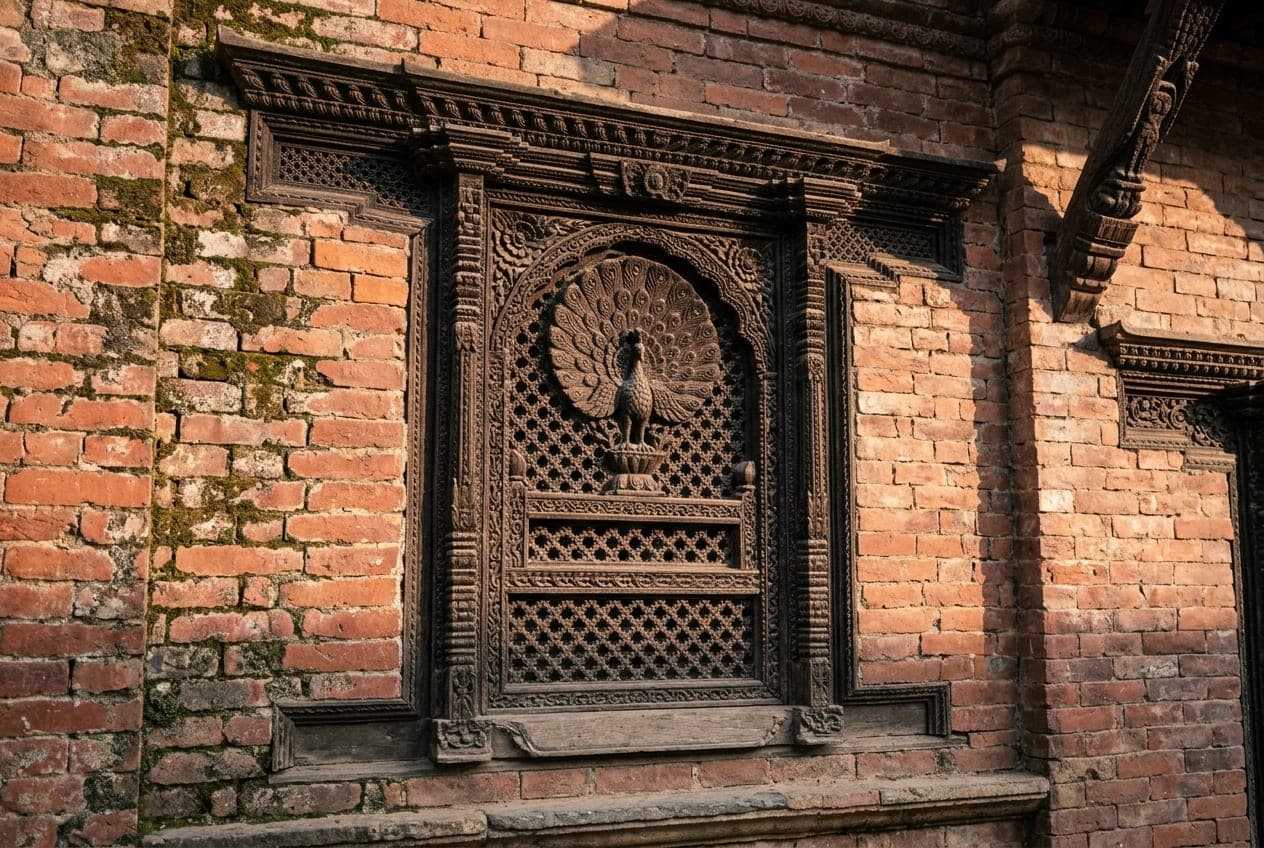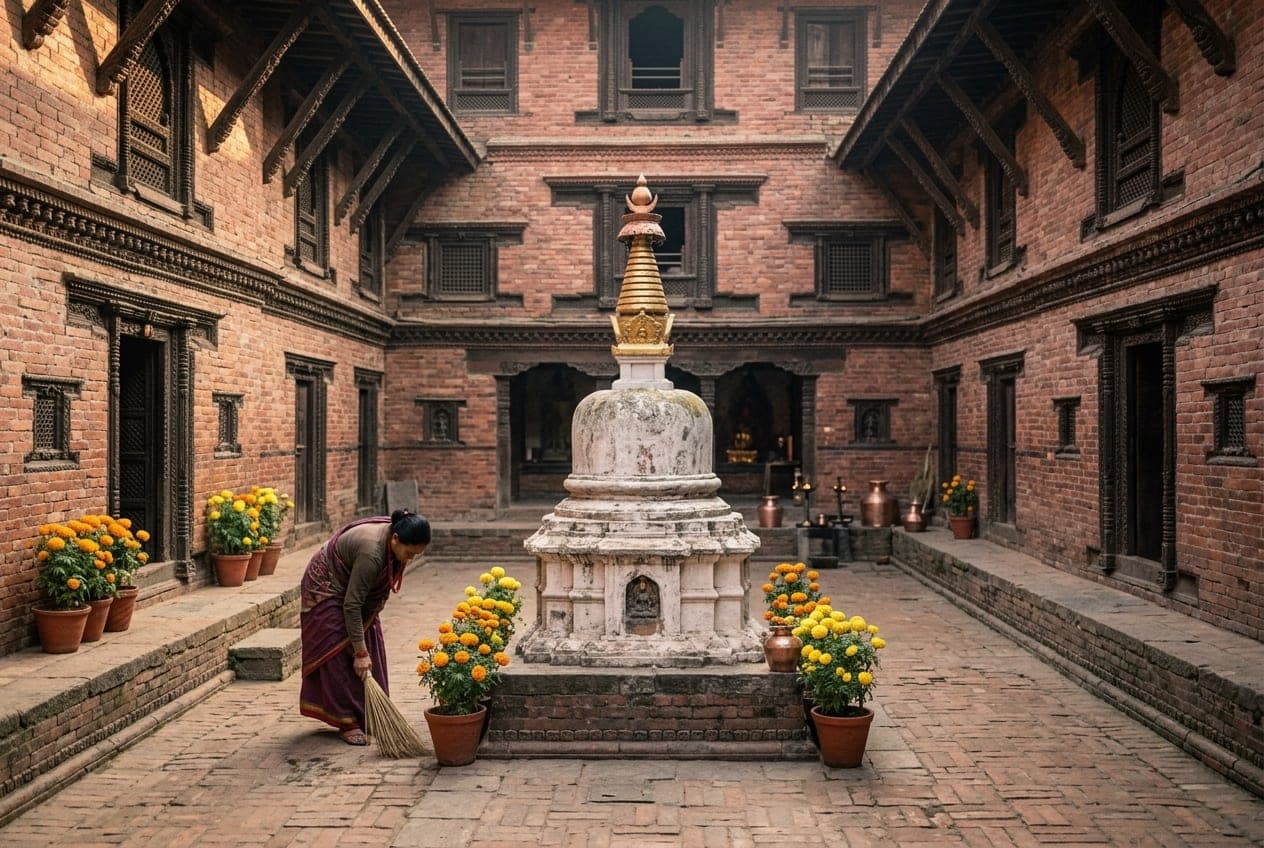
Patan, also called Lalitpur, is the old royal city just south of Kathmandu across the Bagmati river. Walk its lanes and you hear small hammers on copper from workshops at street level. Patan has been a centre of metalwork for centuries, and statues, roof ornaments and embossed doors made here are used in temples and monasteries across the Himalaya. Patan's Durbar Square, with its stone and brick temples, is a short walk from the old workshop lanes.
Two techniques
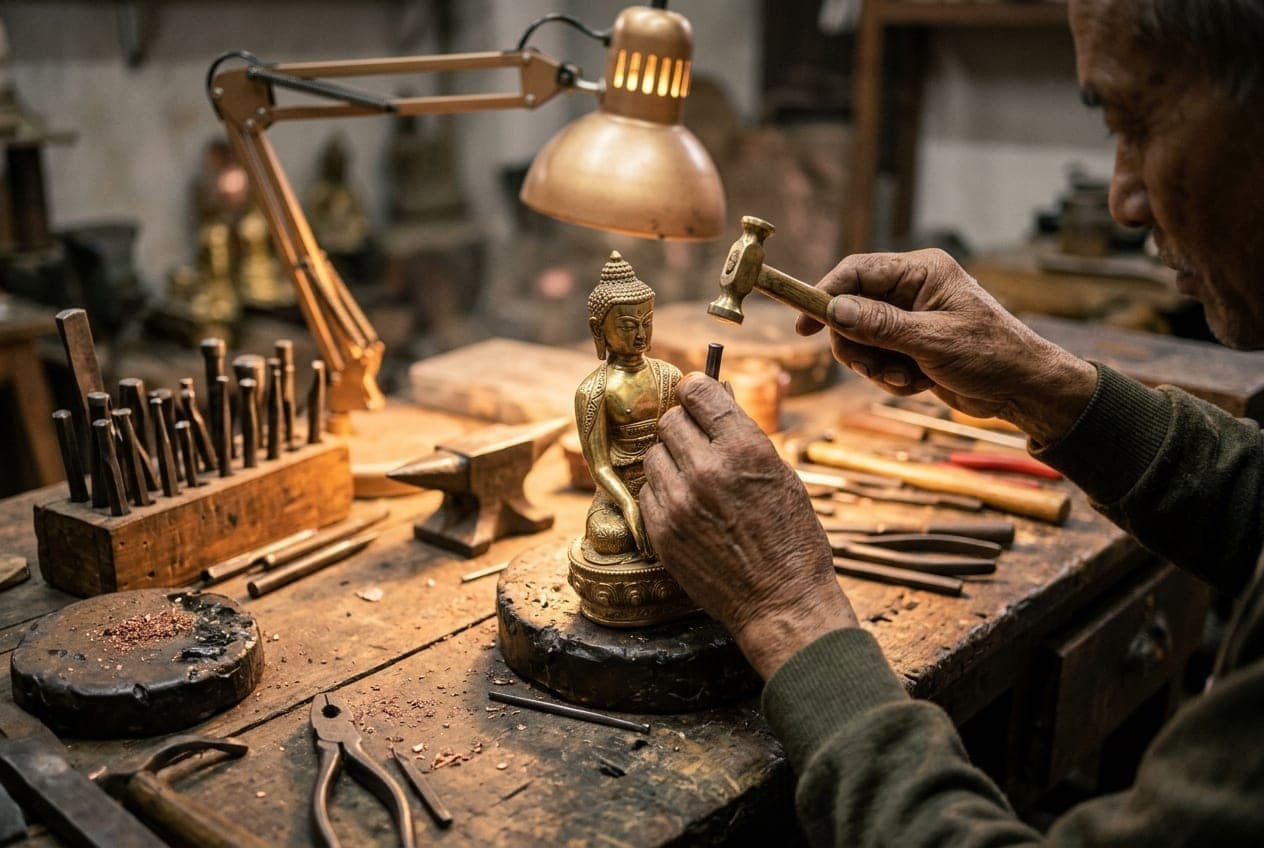
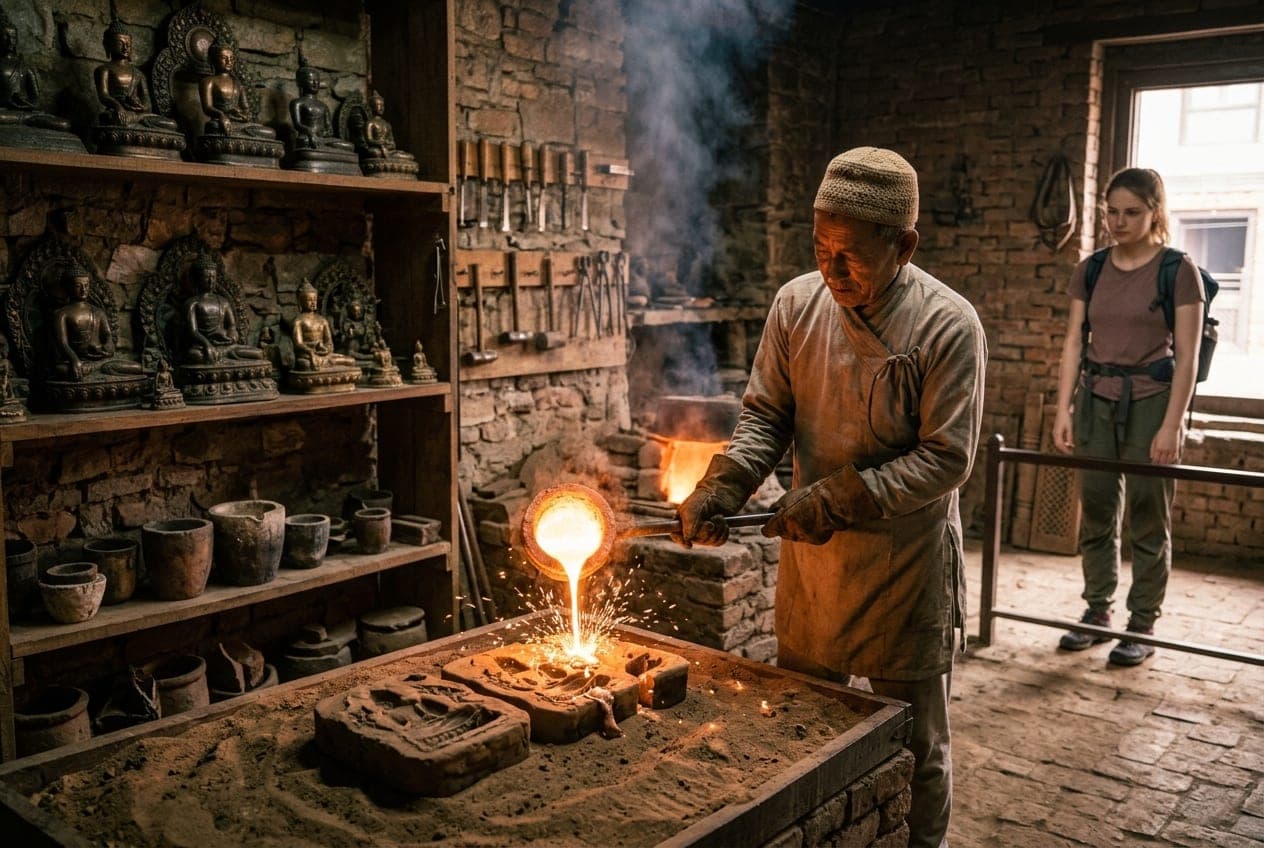
Lost-wax casting starts with a model in wax. Layers of clay are built up around it and left to dry, which takes days. The mould is then heated so the wax melts out, and molten metal is poured into the space it leaves. When the metal has cooled, the clay is broken away, so each mould is used only once. The rough casting is then cleaned, chased with small punches and polished.
Repoussé means hammering a design into a sheet of copper from the back, so that it rises in relief. It's how the valley's embossed doors, toranas and roof ornaments are made. Most statues in the valley are cast in copper alloys such as bronze or brass, and many are then gilded. Chasing the fine detail with small punches can take longer than the casting itself.
What fits into five days
Because the moulds need time to dry, nobody can model, cast and finish their own piece in five days. Our Metal Craft Workshop in Patan is planned around that. You model a small piece in wax and learn how moulds are built. You clean, chase and polish a small piece the workshop has already cast, which is yours to keep. And you spend a morning hammering a copper repoussé panel. If the foundry pours metal while you're there, you watch, but pours follow the workshop's own schedule. Your teacher adjusts everything to your level, so beginners and experienced makers can work side by side.
Day 1 starts at the Patan Museum, part of the old palace, with its large collection of cast bronzes, and the Golden Temple, a Buddhist monastery covered in gilded copper. The mornings after that are at the workshop, with lunch included and free afternoons. You stay four nights in a guesthouse in the old town, and groups are at most six people per teacher. Afternoons are free to wander Patan's courtyards or visit other workshops.
Bhaktapur and its woodcarvers are under an hour away, so it's easy to combine this with a wood carving workshop in Bhaktapur.
Metal craft journeys
Metal Craft Workshop in Patan
Best time to go
The workshop runs all year. October to November and March to May are the most comfortable months. Winter mornings are cold but bright, and the foundry is a warm place to be.
The monsoon (June to mid-September) brings afternoon rain and fewer visitors. Patan's long chariot festival, Rato Machhindranath Jatra, usually starts in spring and runs for several weeks; it's worth seeing if your dates line up.
What to expect
Mornings run from about 9 am to lunch. Wax modelling is quiet, careful work at a bench. Chasing and polishing are slow and repetitive, and repoussé is loud: you sit with a copper sheet on a bed of resin and work it with small hammers and punches.
Protective glasses are provided. Wear clothes you don't mind getting dirty, and closed shoes on foundry days.
Who it's for
Makers and the curious alike: jewellers, sculptors and art students who want to see a traditional technique at its source, and beginners who'd like to learn by doing. No fitness or experience is needed.
Solo travellers fit in easily, and couples or friends can share a bench. For a lighter introduction, our Kathmandu Valley heritage tour stops at metal workshops in Patan.
Frequently asked questions
Not during the five days: a lost-wax mould has to dry slowly for days before metal can be poured. The cast piece you take home is one the workshop made in advance, which you clean, chase and polish yourself. If you'd like your wax model cast after you leave and sent on, ask us; it's priced separately.
None at all. Teachers start you on simple shapes and adjust to your pace; jewellers and sculptors can go further.
Usually copper or a copper alloy such as brass or bronze, as in most Patan statues. Gold or silver plating can be arranged at extra cost.
Yes. If there's a pour, you watch from a safe distance while the foundry team handles the molten metal. Wear closed shoes and cotton clothes.
Yes. Both pieces are small enough to pack, and we wrap them for travel. Ask the workshop for a short note saying they are new work; it helps if customs ask about antiques.