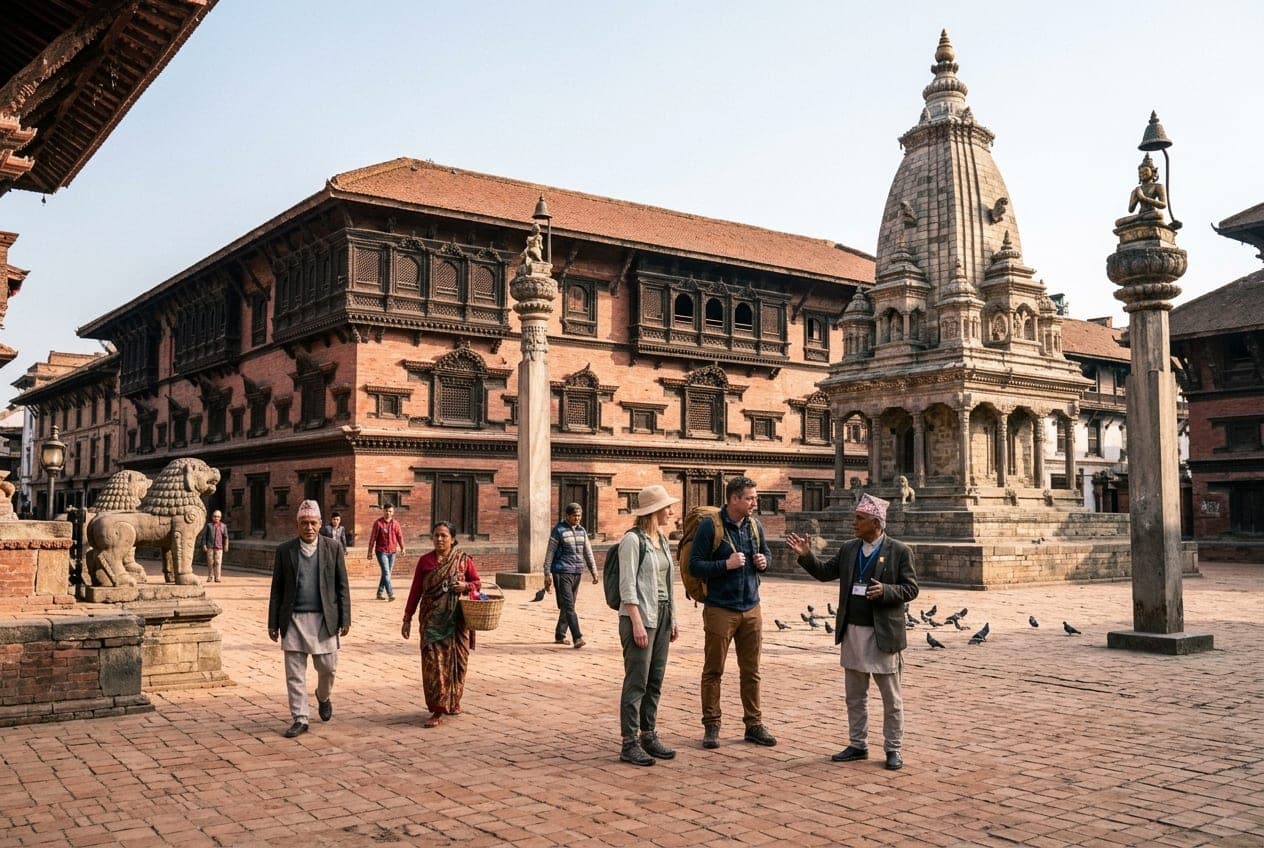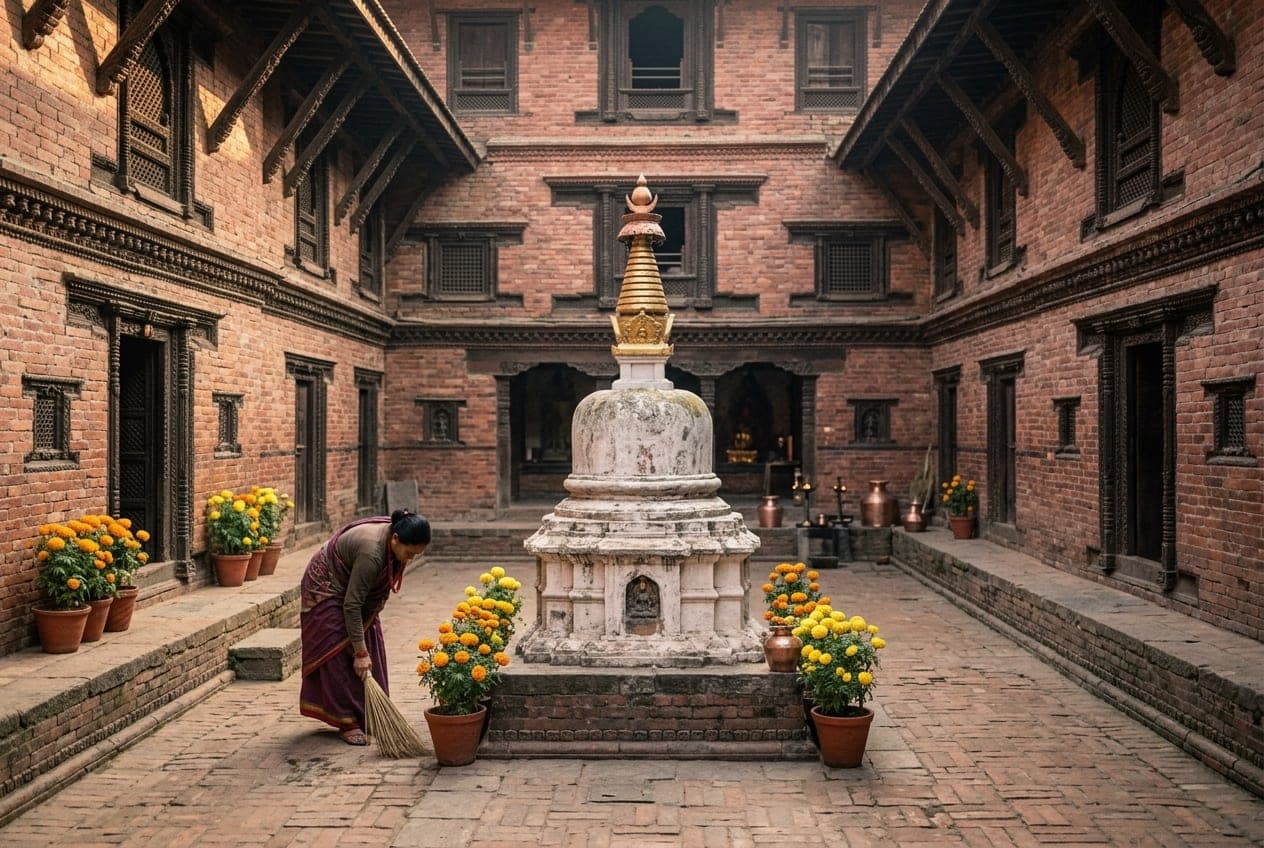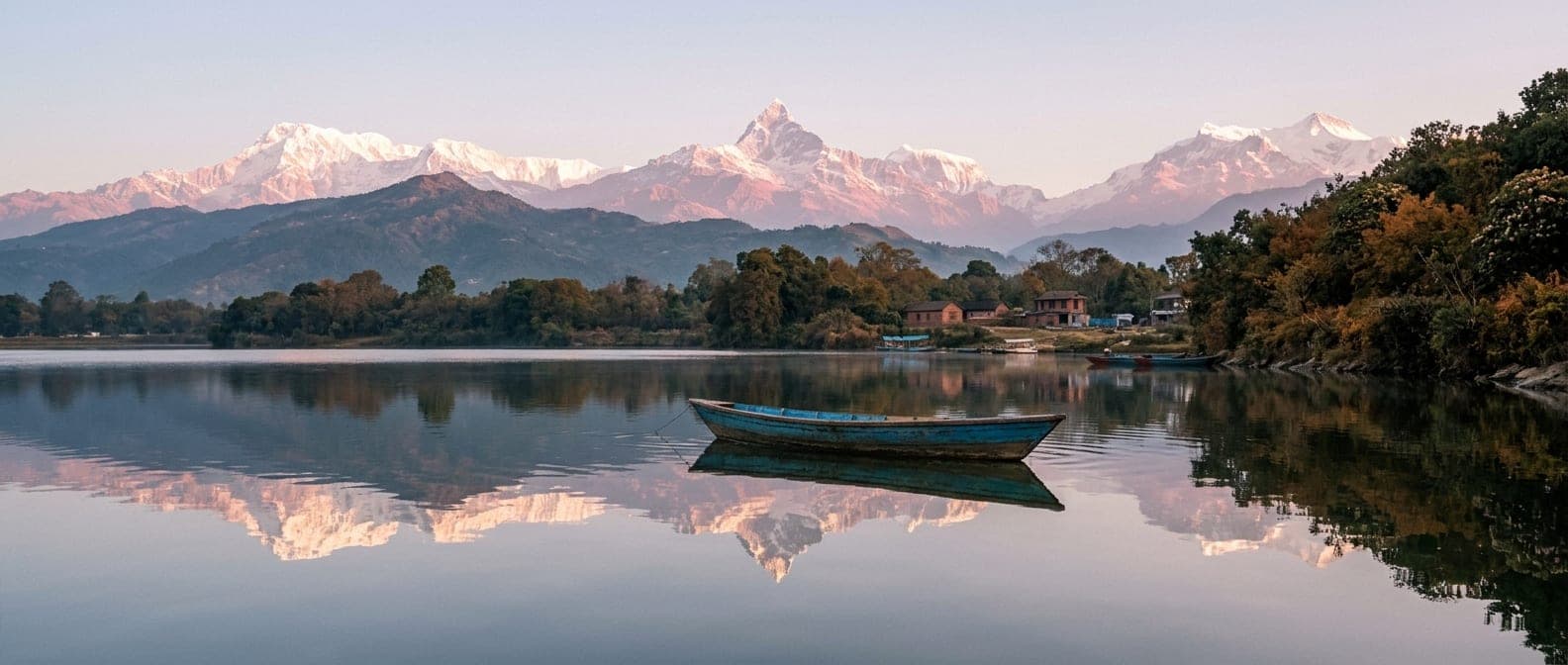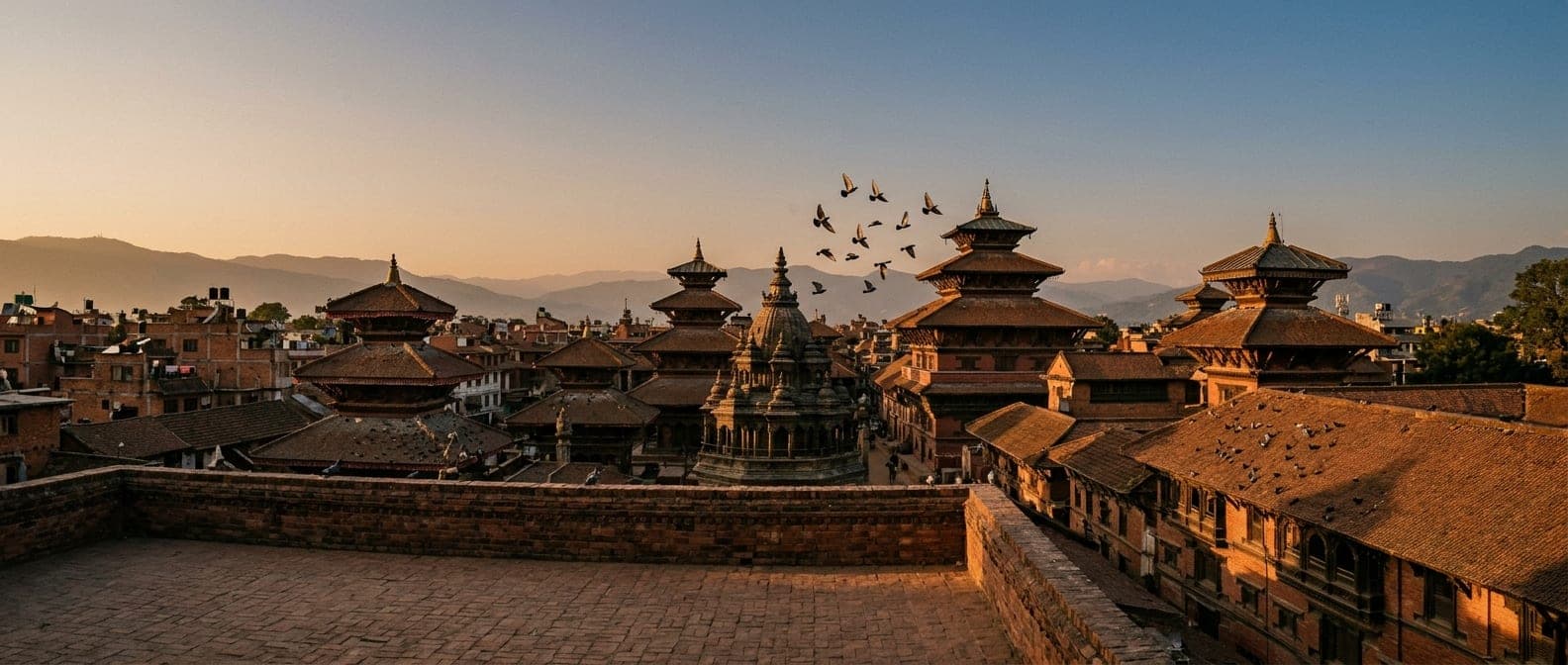
The Kathmandu Valley has seven groups of monuments on UNESCO's World Heritage list, and thousands of smaller shrines, courtyards and carved windows still in daily use. Most of it was built by the Newar people, whose crafts of woodcarving, metal casting and brickwork are still passed down in family workshops. Hindu and Buddhist traditions overlap here, and festivals fill the streets for much of the year. Our heritage journeys are about understanding these places and, on most of them, learning a craft from the people who practise it.
Our heritage journeys
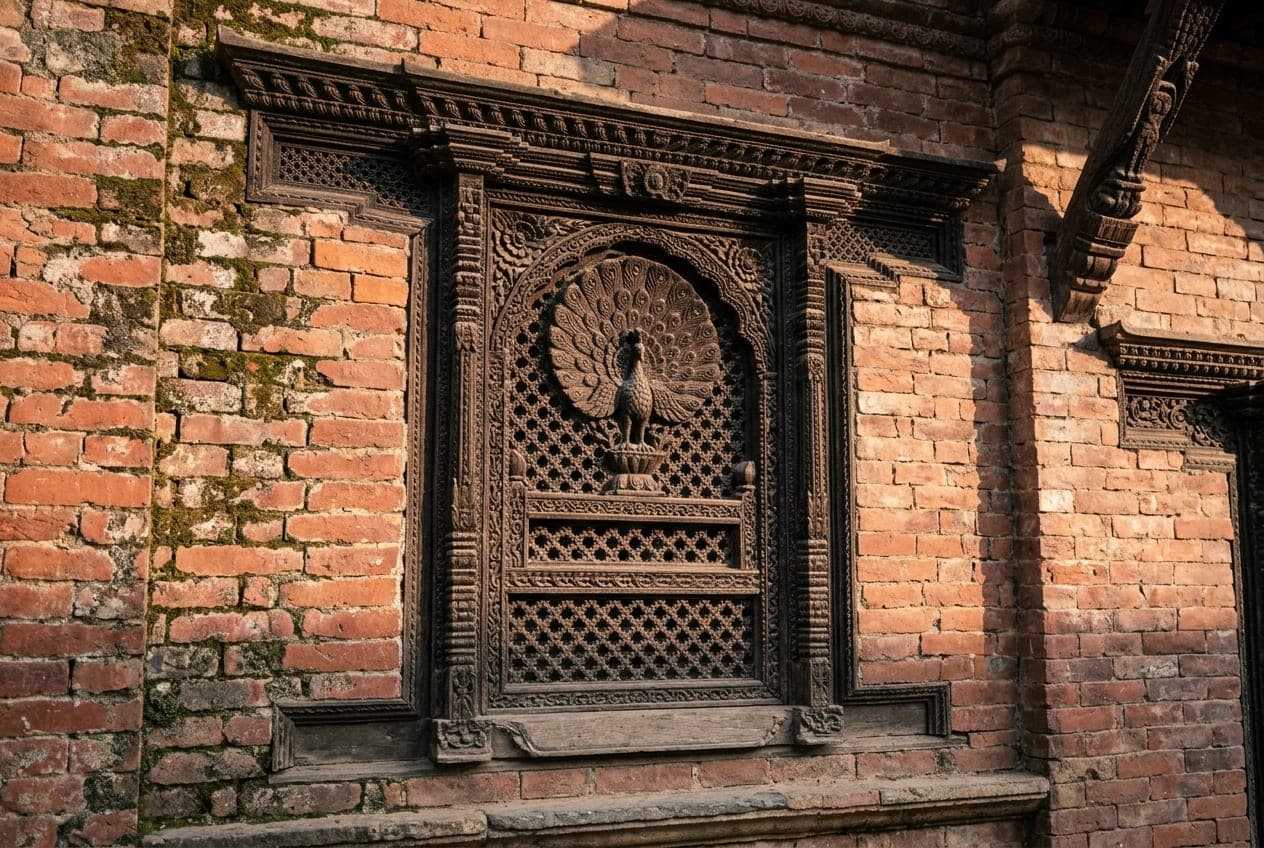
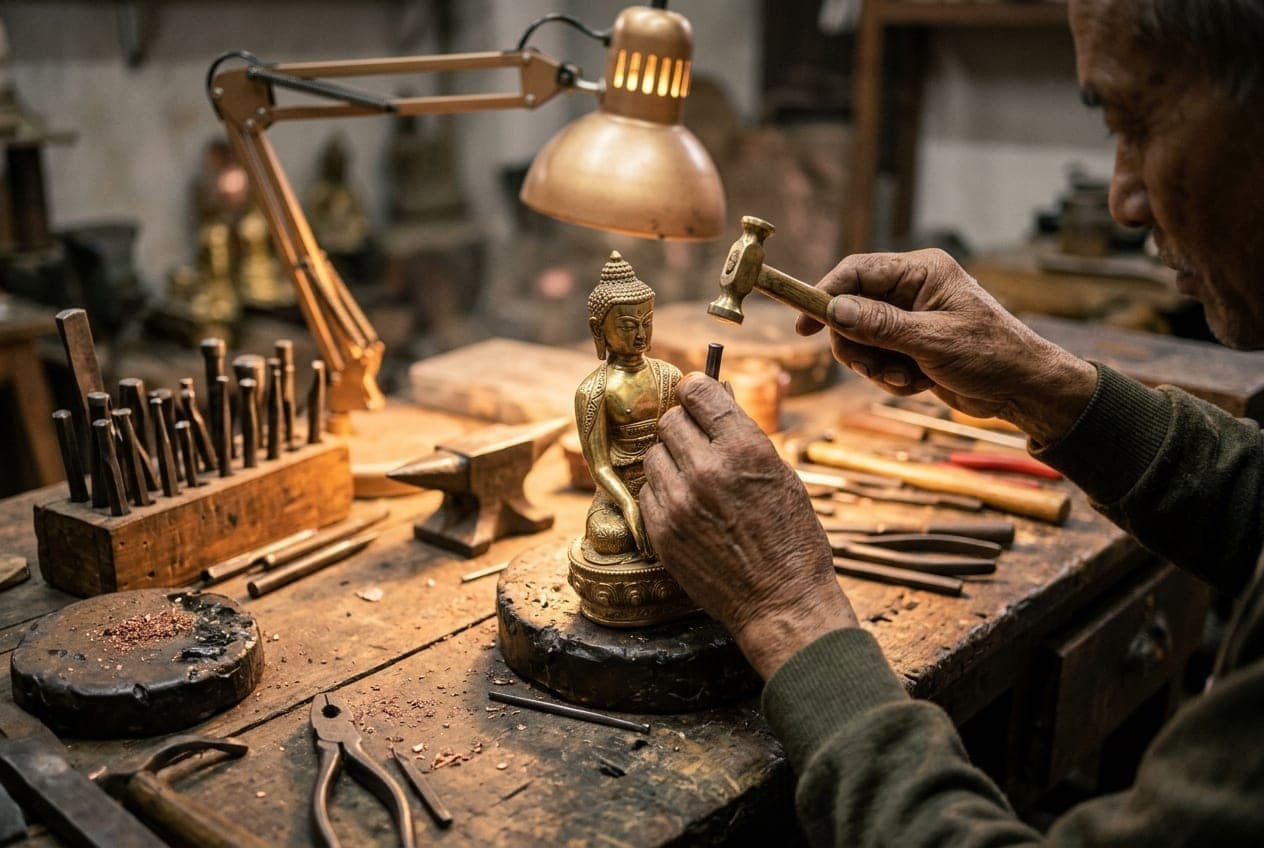
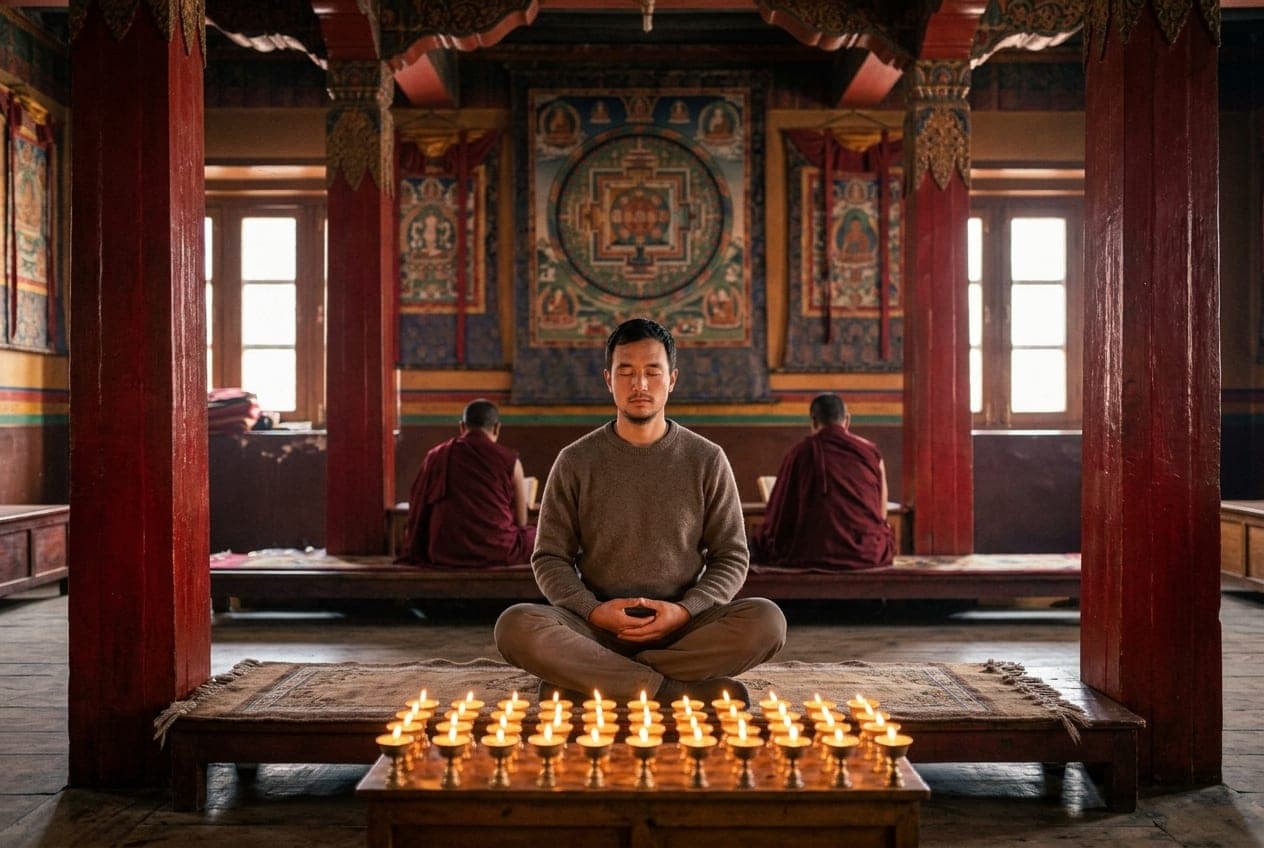
Start with a Kathmandu Valley heritage tour: three days with a local guide through the Durbar Squares of Kathmandu, Patan and Bhaktapur, Swayambhunath and Boudhanath, with stops at artisan workshops. To go deeper, spend five days in Bhaktapur, four mornings of them at the bench, on a wood carving workshop, or learn lost-wax casting and repoussé on a metal craft workshop in Patan. The Newar architecture workshop spends four days with a conservation architect and restoration craftsmen. For something quieter, our meditation and yoga retreat is a week of practice near Nagarkot on the valley rim. Every craft trip starts with a walk to see the real thing: carved windows in Bhaktapur, cast bronzes in the Patan Museum, temple struts in the squares.
What hands-on means
On the craft workshops you work at the bench for three to four hours each morning, with at most six people per teacher, and leave with something you made. We're clear about what fits into a few days: a small carved panel, a cast piece you finished and a copper panel, or practice pieces of brick and timber. Teachers adjust to your level, so beginners and experienced makers can share a bench. Afternoons are free.
Pace and practicalities
Heritage journeys are gentle: no altitude, little hard walking, and time to wander. You stay in hotels and guesthouses inside the old cities, usually with breakfast and lunch included. Trips run as private trips on your dates, and most start in Kathmandu, Patan or Bhaktapur, all within an hour of the airport. You send a booking request online with no payment, and we confirm in writing and send an invoice. Prices are per person, and every trip page lists what's included.
Many travellers spend a few days in the valley before or after a trek, or add a Chitwan safari. If you have a festival, a craft or a family trip in mind, tell us and we'll plan it with you.
Heritage journeys
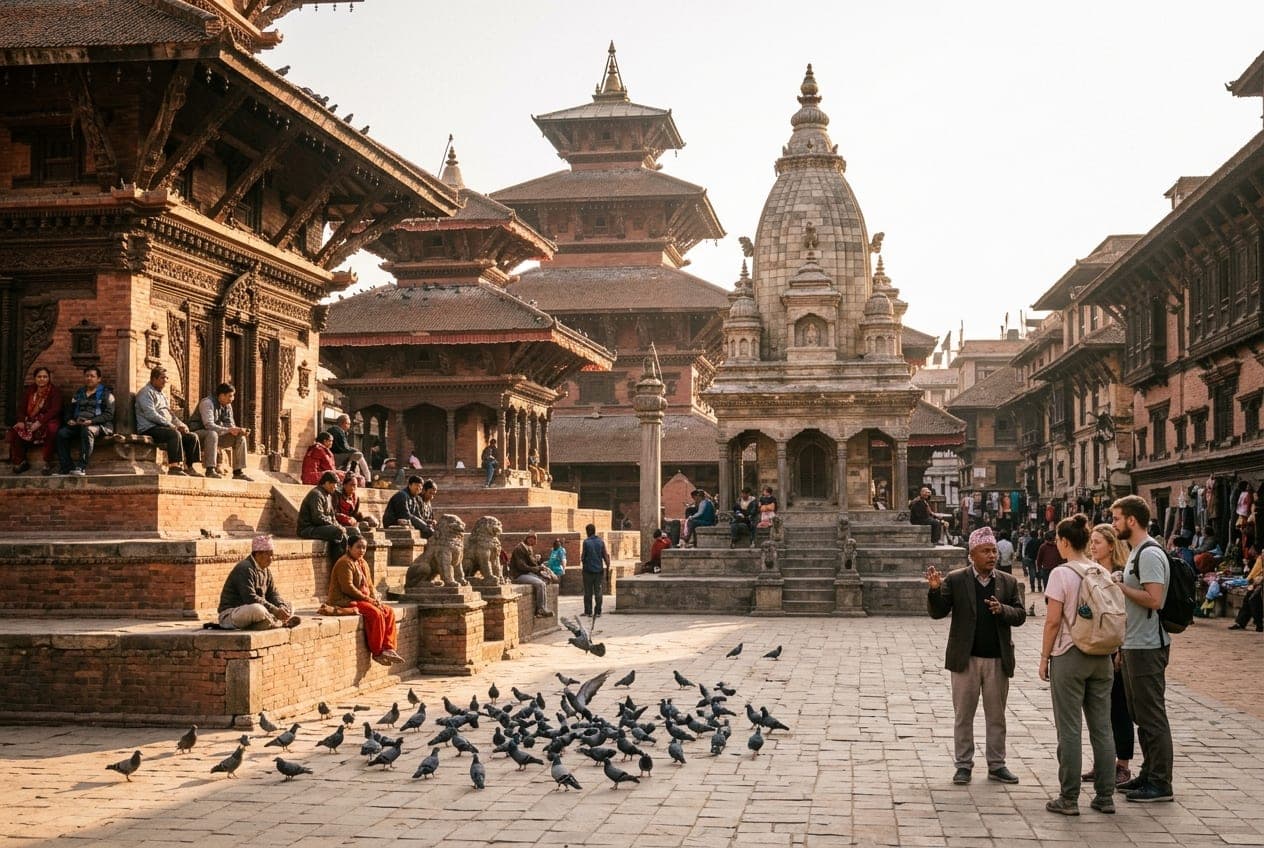
Kathmandu Valley Heritage Tour
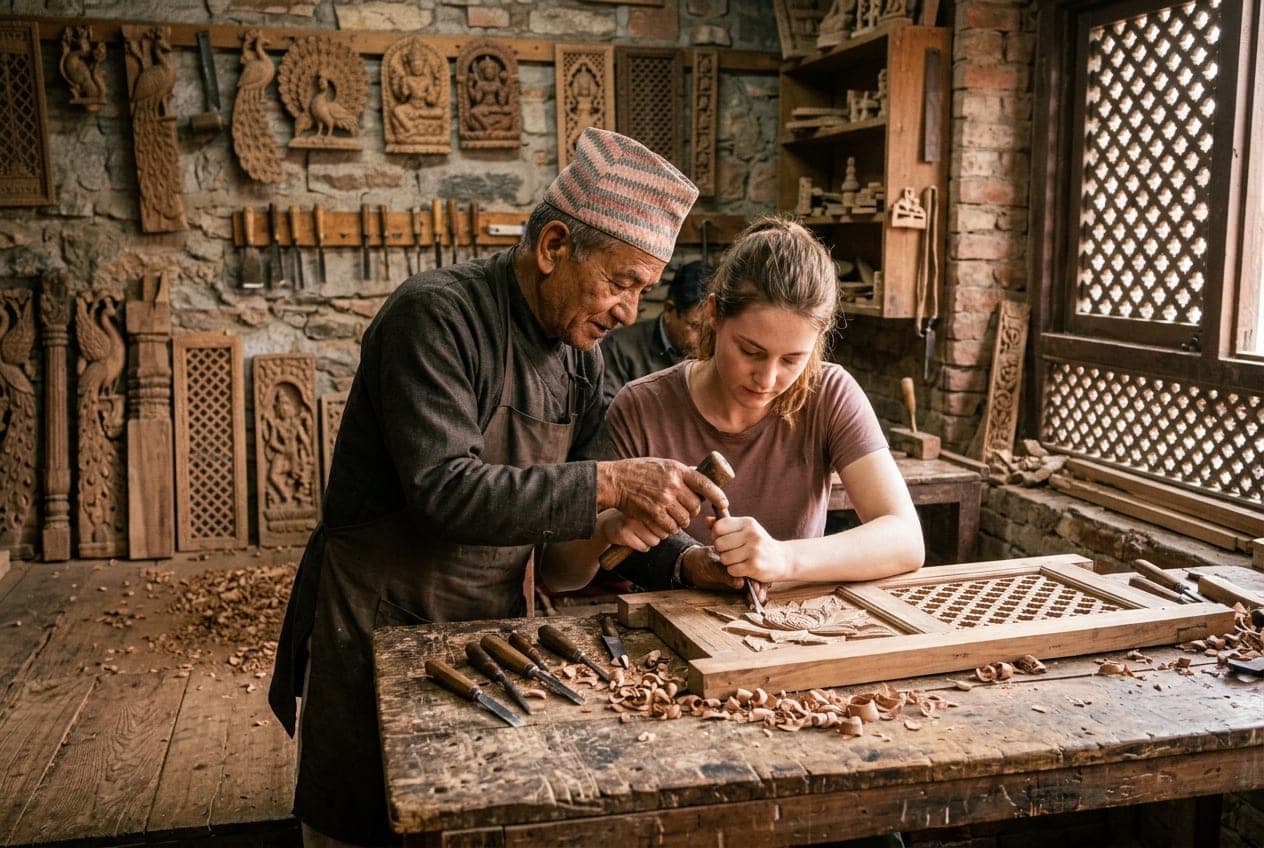
Wood Carving Workshop in Bhaktapur
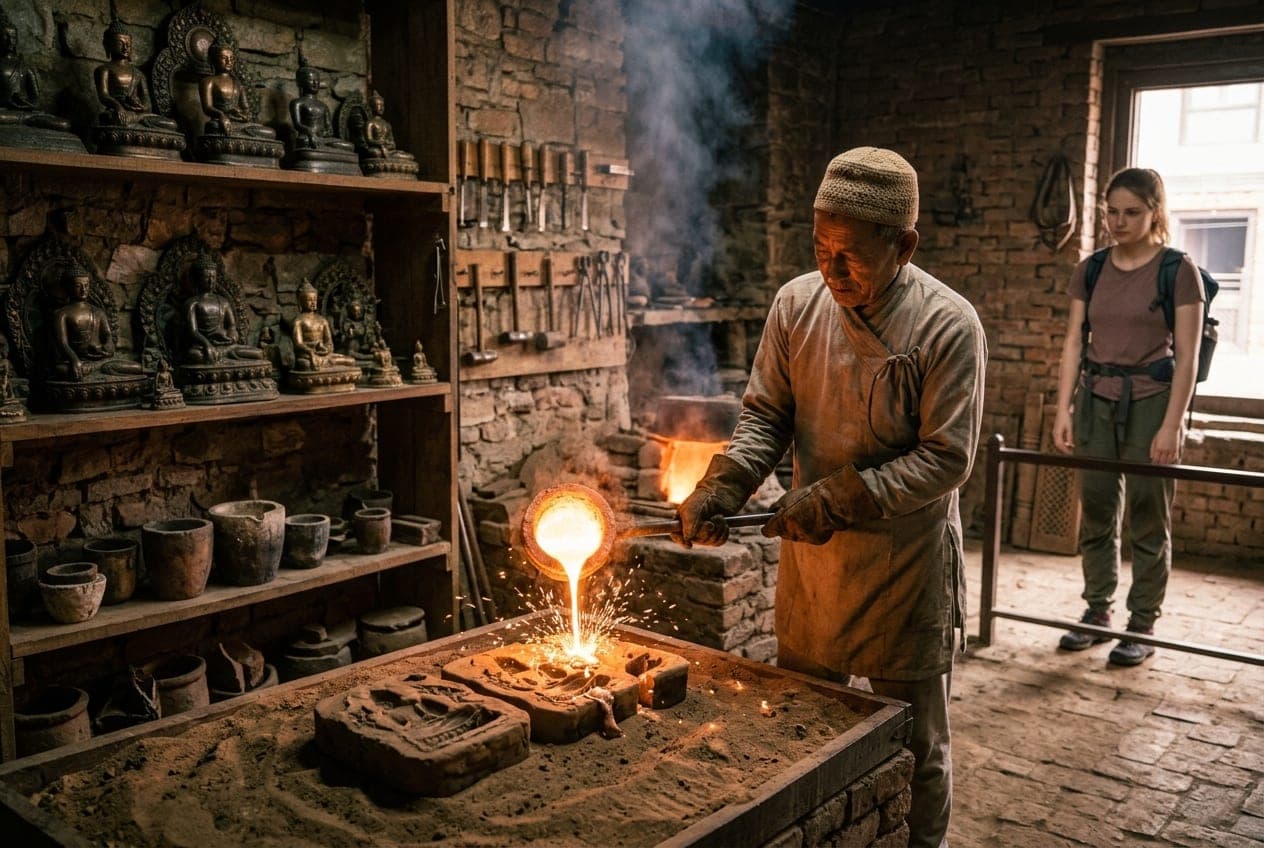
Metal Craft Workshop in Patan
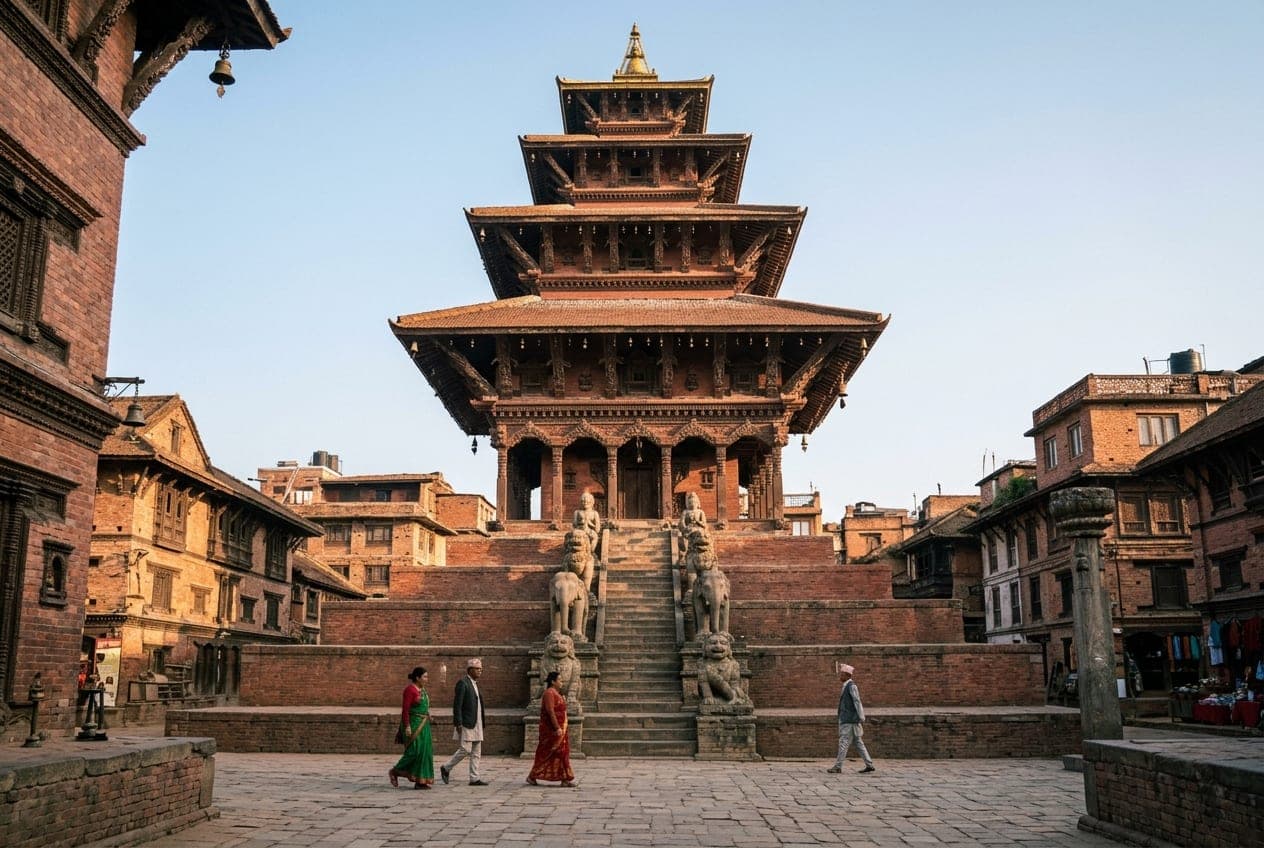
Newar Architecture Workshop
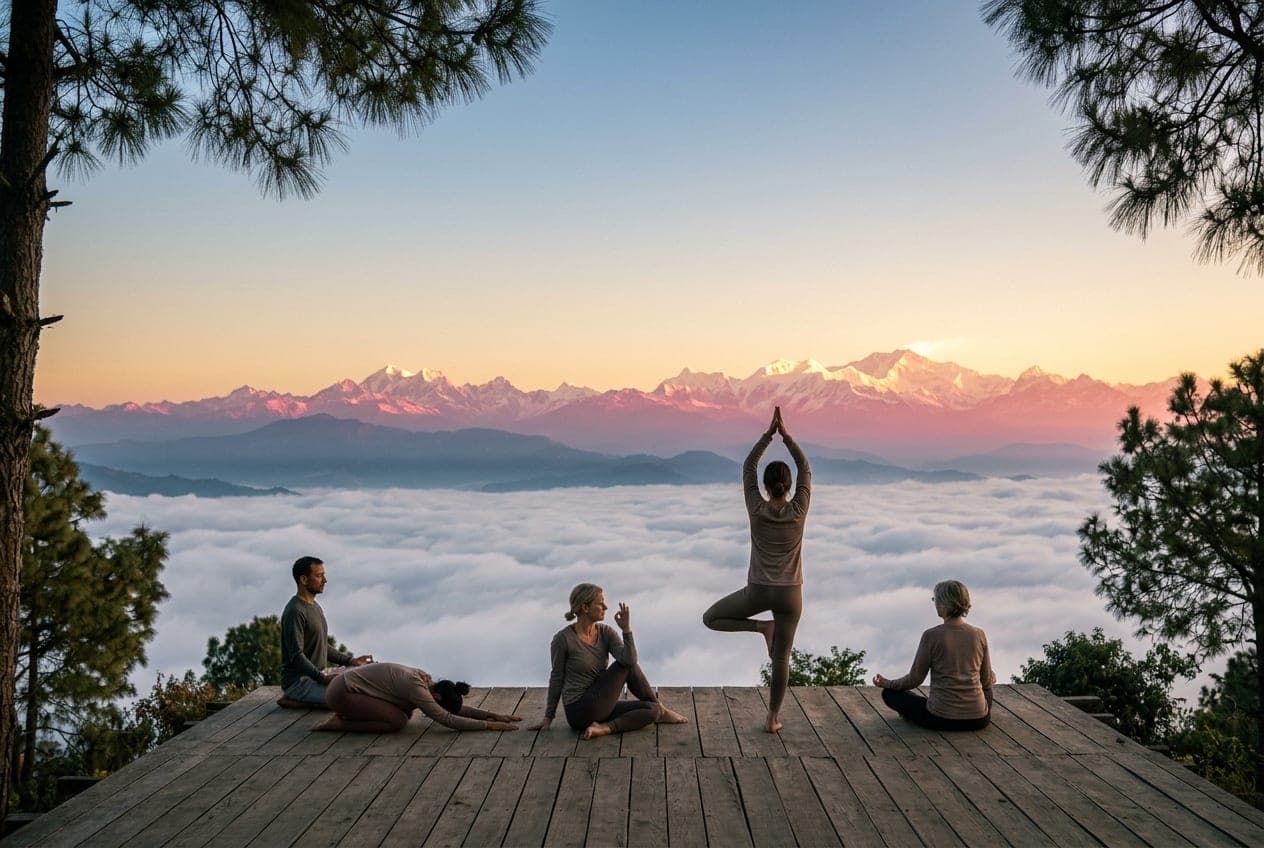
Meditation & Yoga Retreat
Best time to go
Heritage journeys run all year. October and November are dry and clear, with Dashain and Tihar; March to May is warm, with Bisket Jatra in Bhaktapur and Rato Machhindranath in Patan. December to February is sunny by day and cold at night.
The monsoon (June to mid-September) brings afternoon rain, fewer visitors and Indra Jatra in Kathmandu. Only the architecture workshop and the meditation retreat don't run in those months.
What to expect
Expect unhurried days: mornings at a workshop bench or on a guided walk, then lunch and free afternoons. You'll take your shoes off at shrines and walk clockwise around stupas.
Workshops are seated and practical; tours involve gentle walking on brick and stone paving. Breakfast and lunch are included on most trips.
Who it's for
Curious travellers of any age: families, couples, solo travellers, makers, designers, architects, and anyone who likes history, religion or food. No fitness or experience is needed.
They make a good first few days in Nepal, a calm end to a trip after a trek, or a trip in their own right if you'd rather make something than buy it.
Frequently asked questions
A heritage tour shows you the valley's monuments and how they're used today, with short visits to artisan workshops. A craft workshop spends several mornings at the bench with one teacher, so you learn the technique and leave with something you made.
None at all. Teachers start beginners on simple motifs and adjust to your pace; experienced makers can go further.
Any time of year. October and November have the clearest weather and the biggest festivals; spring is warm; winter is quiet and sunny; the monsoon brings rain but fewer visitors.
Yes. Tell us your dates and we'll plan around Dashain, Tihar, Indra Jatra, Bisket Jatra or other festivals where we can. Festival dates follow the lunar calendar and change every year.
Yes. There's no altitude and little hard walking. Children often enjoy the craft workshops, and we adapt the pace and arrange private transport for older travellers.