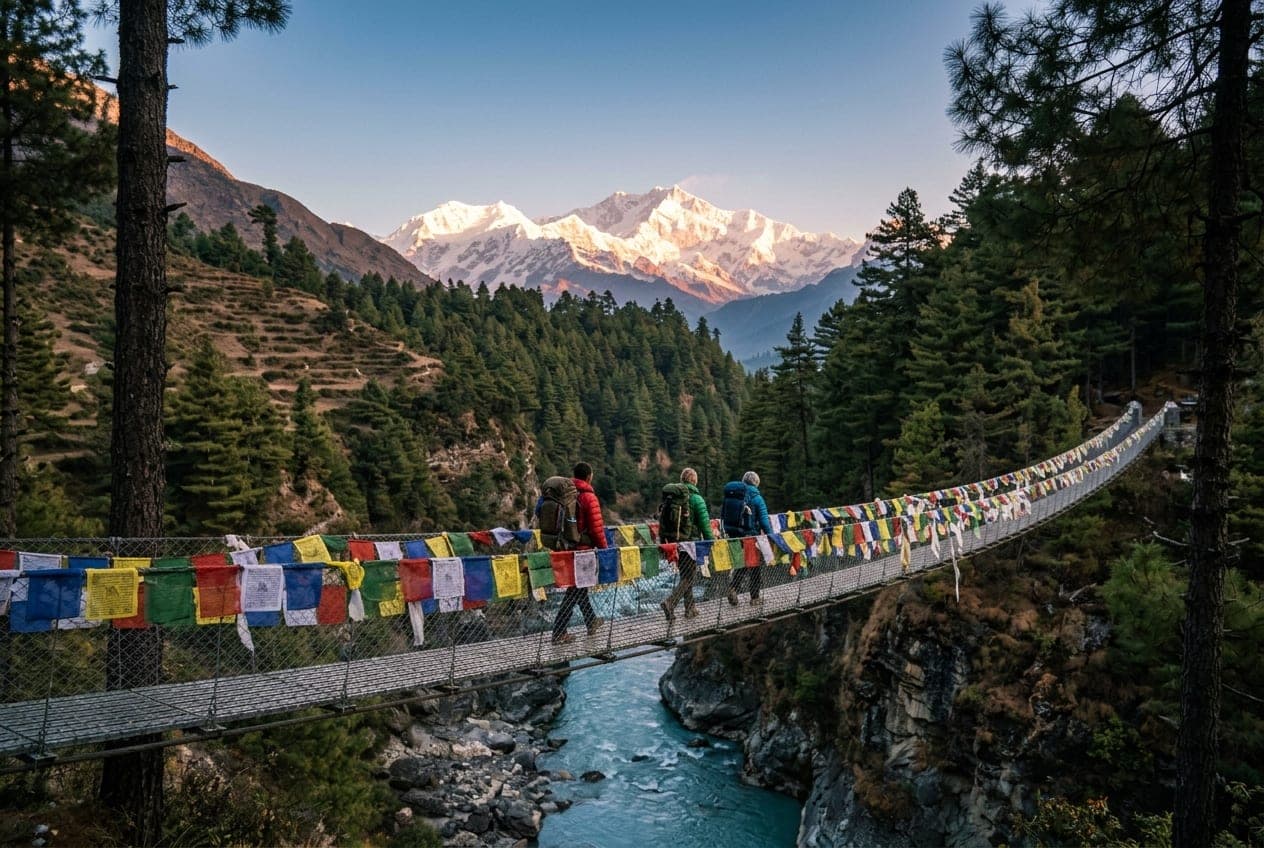
Trekking in Nepal means walking for days on village paths, sleeping in teahouses and gaining height slowly until you're among the big peaks. You don't need climbing skills. You need to be fit enough to walk 4 to 7 hours a day, several days in a row, and patient enough to let your body adjust to the altitude.
Our four treks
The Everest Base Camp trek (14 days) flies to Lukla and climbs the Khumbu valley to Everest Base Camp (5,364 m) and the Kala Patthar viewpoint (5,644 m). It's the highest of our treks. The Annapurna Base Camp trek (11 days) starts near Pokhara and follows the Modi Khola gorge into the Annapurna Sanctuary at 4,130 m. The Manaslu Circuit (15 days) is a remote loop through a restricted area, over the Larkya La pass at 5,106 m. The Langtang Valley trek (9 days) needs no flights: a day's drive north of Kathmandu, then up a glacial valley to Kyanjin Gompa (3,870 m) and Kyanjin Ri (4,773 m).
Difficulty and fitness
Langtang and Annapurna Base Camp are moderate, with shorter days and lower nights. Everest Base Camp and the Manaslu Circuit are challenging: longer, higher, and with nights above 4,400 m. If you can hike for 5–6 hours with a day pack and feel fine the next day, you can train for any of them. Start two or three months before you travel with long walks, hills and stairs.
How our treks work
Every trek has a licensed Nepali guide, and porters carry your main bag, one porter for every two travellers, so you carry only a day pack. We arrange the permits, the transport, your hotel in Kathmandu at the start, and teahouse rooms with three meals a day on the trail. Groups are at most 12 people. Treks run as private trips on the dates you choose, and we publish group departures when we have them.
The itineraries gain height gradually and include acclimatisation days. Guides check everyone's oxygen level and pulse each evening with a pulse oximeter. If someone develops altitude sickness, they go down, with a member of the team.
Teahouses
Teahouses are simple lodges run by local families: twin rooms with thin walls, a shared dining room with a stove, and toilets that are often shared higher up. Hot showers, wifi and phone charging usually cost extra. The food is filling and repetitive: dal bhat, noodle soup, fried rice, momos and porridge. Above about 4,000 m rooms are cold at night, so a warm sleeping bag matters.
Trekking journeys
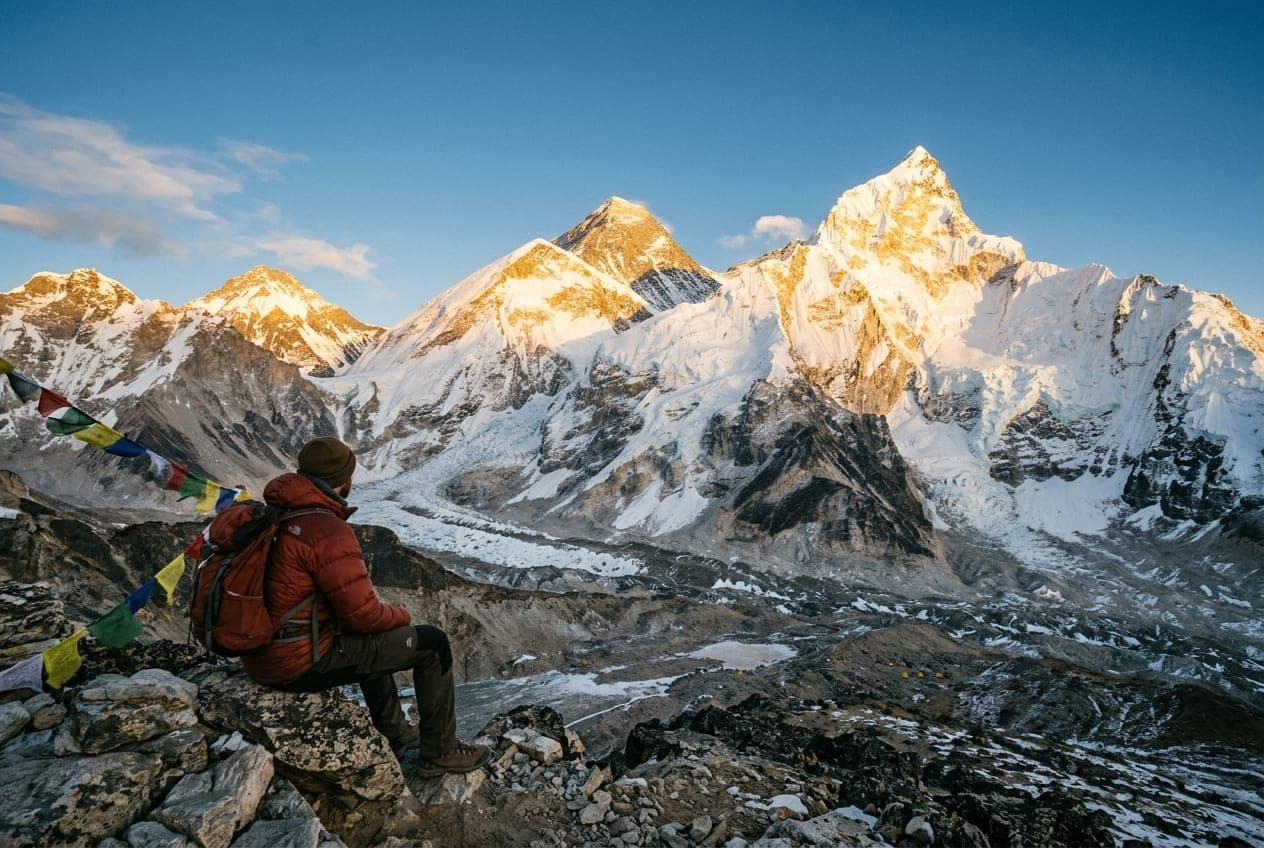
Everest Base Camp Trek
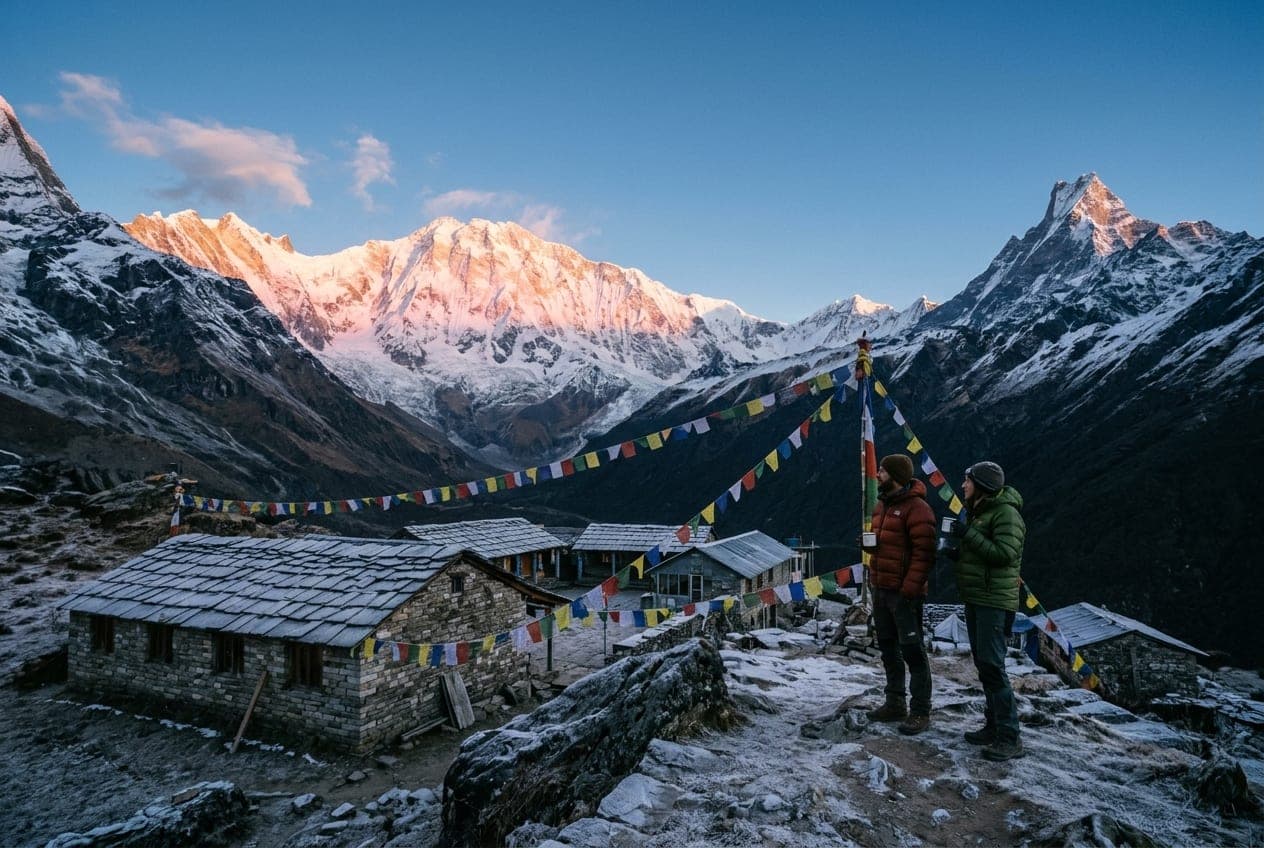
Annapurna Base Camp Trek
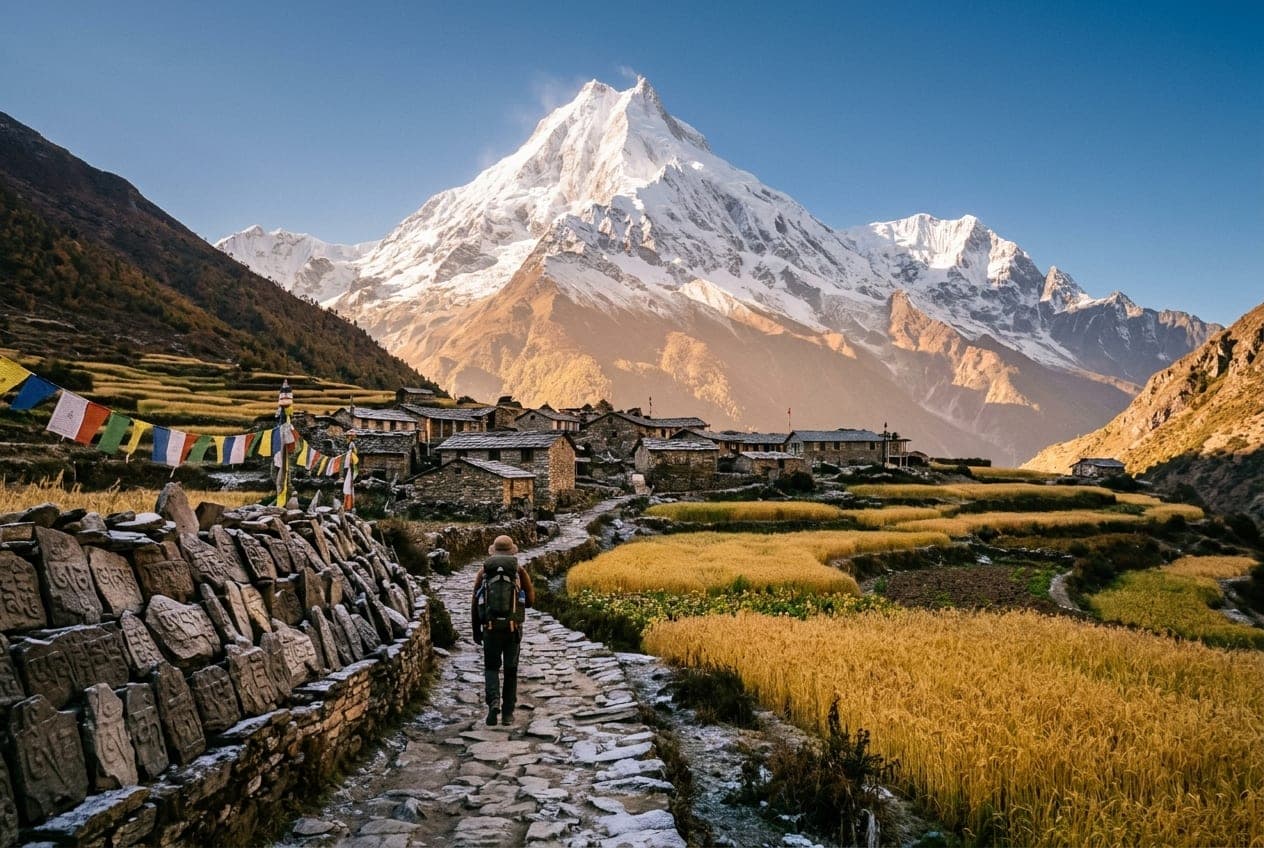
Manaslu Circuit Trek
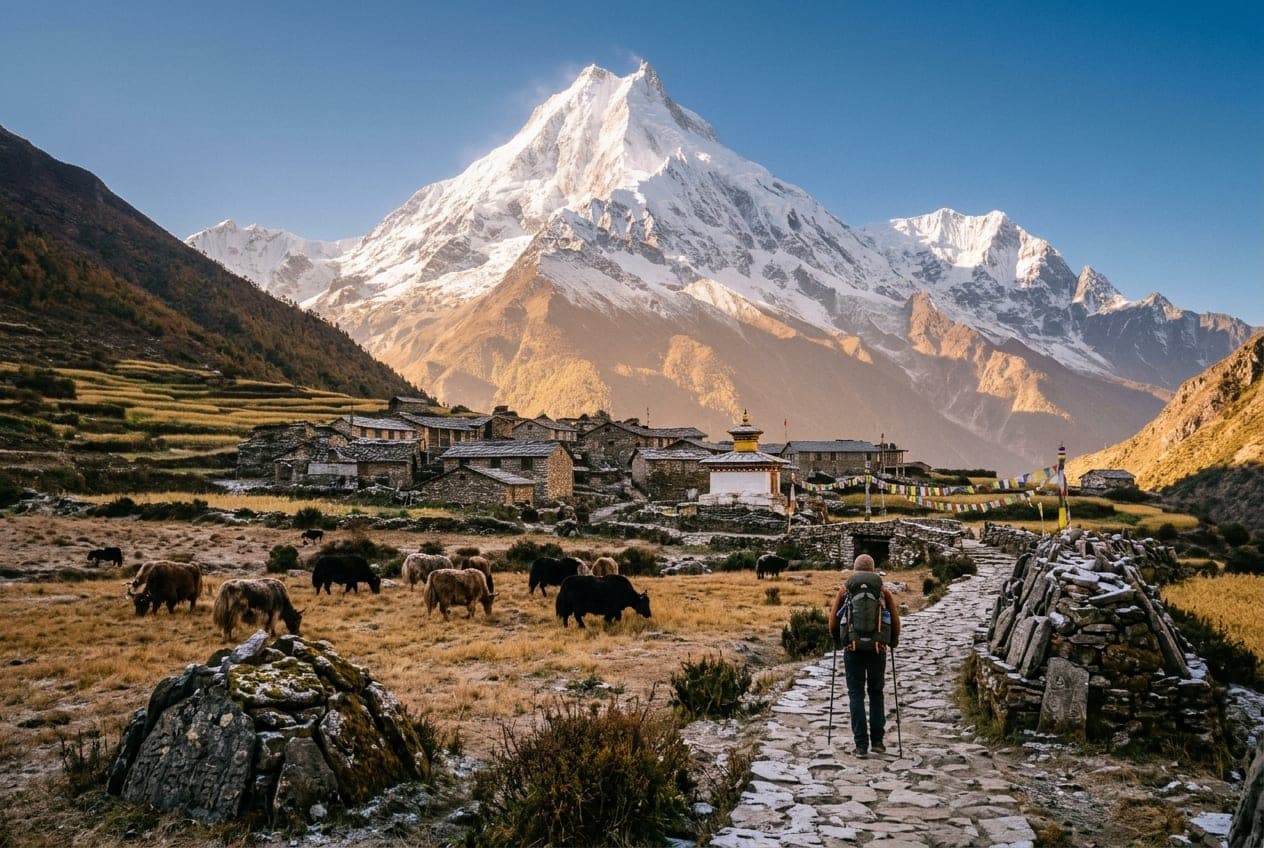
Langtang Valley Trek
Best time to go
The main seasons are autumn (late September to November), with the clearest skies, and spring (March to May), which is warmer, with rhododendrons in flower on the lower trails and more afternoon cloud.
December to February is cold and quiet; lower treks like Langtang work well if you pack for nights below freezing. In the monsoon (June to mid-September) trails are wet, leeches come out in the forests, and views and flights are often lost to cloud, so we don't recommend trekking then.
What to expect
Days start early: tea, breakfast, and on the trail by about 8 am, before the clouds build. You walk 4 to 7 hours with breaks and a lunch stop, and reach the next teahouse by mid-afternoon. Evenings are for cards, reading and an early night.
Your guide sets a steady pace that suits the slowest walker on the day. Expect cold nights at altitude, basic bathrooms and few showers. Bring cash in Nepali rupees for extras on the trail.
Who it's for
Active people who walk regularly and want several days in the mountains. First-time trekkers usually start with Langtang or Annapurna Base Camp. Everest Base Camp and the Manaslu Circuit suit people with some multi-day hiking behind them, or who are ready to train for it.
Solo travellers are welcome on every trek except Manaslu, which by law needs at least two trekkers. Families and friends can take any trek as a private trip on their own dates.
Frequently asked questions
At most 12 people. Private treks can be just one or two of you, except on the Manaslu Circuit, which needs at least two trekkers.
In most of Nepal's popular trekking areas, foreign trekkers are now required to walk with a licensed guide, and restricted areas such as Manaslu also need at least two trekkers. The rules have changed several times since 2023 and vary by region. With us it doesn't matter: every trek includes a licensed guide.
You should be comfortable walking 5–7 hours a day on hilly ground for several days in a row. Long walks, stairs or cycling in the two or three months before you come make a real difference.
Our itineraries gain height slowly and include acclimatisation days, and guides check oxygen levels every evening. Mild headaches are common. If symptoms get worse, the treatment is to go down, and a member of the team goes with you. Your travel insurance must cover helicopter evacuation in case it's needed.
Langtang Valley or Annapurna Base Camp: lower high points, shorter days, and no nights above 4,130 m. Everest Base Camp and the Manaslu Circuit are longer and higher.