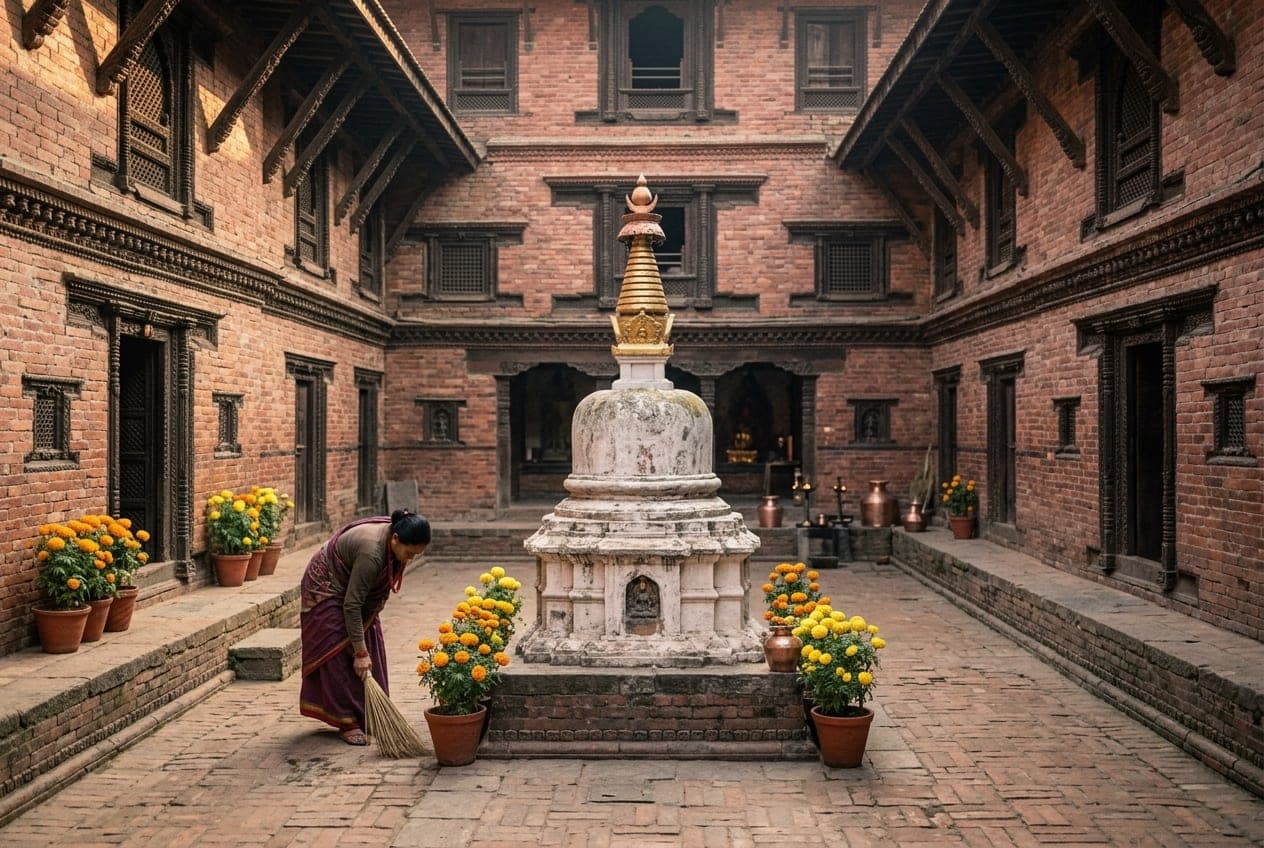
The temples, palaces and courtyards of the Kathmandu Valley were designed and built by Newar masons, carpenters and carvers. A Newar architecture tour with a specialist shows you how they work: what the carved struts hold up, why the roofs are tiered, how timber, brick and mud mortar act together, and why some buildings came through the 2015 earthquake while others fell.
Some background
Newar temples, built of brick with timber frames, tiered roofs and carved roof struts, are the signature buildings of the valley. Most of what stands today dates from the Malla period, roughly the 13th to the 18th century. In 1260 a young Newar craftsman, Araniko, went to Tibet and later to the court of Kublai Khan, where he built the White Stupa that still stands in Beijing. Brick, timber and clay tile all come from the valley itself, and much of the skill lies in how they are combined.
Two popular claims need care. You'll read that Newar builders gave Asia the pagoda roof; tiered roofs in fact have a long and shared history across Asia. And the temples were not built entirely without nails: they rely mainly on pegged timber joints and brick in mud mortar, but iron fittings were used too.
The workshop
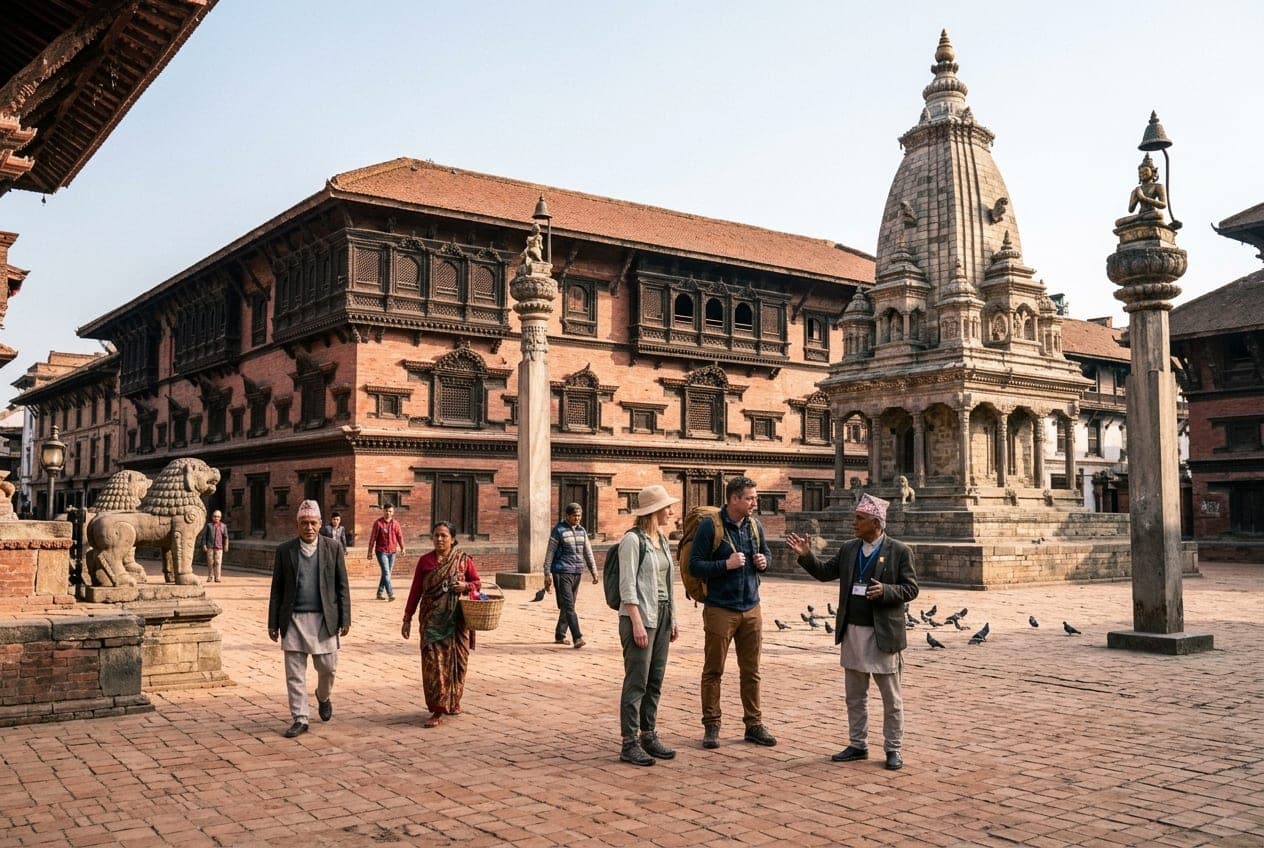
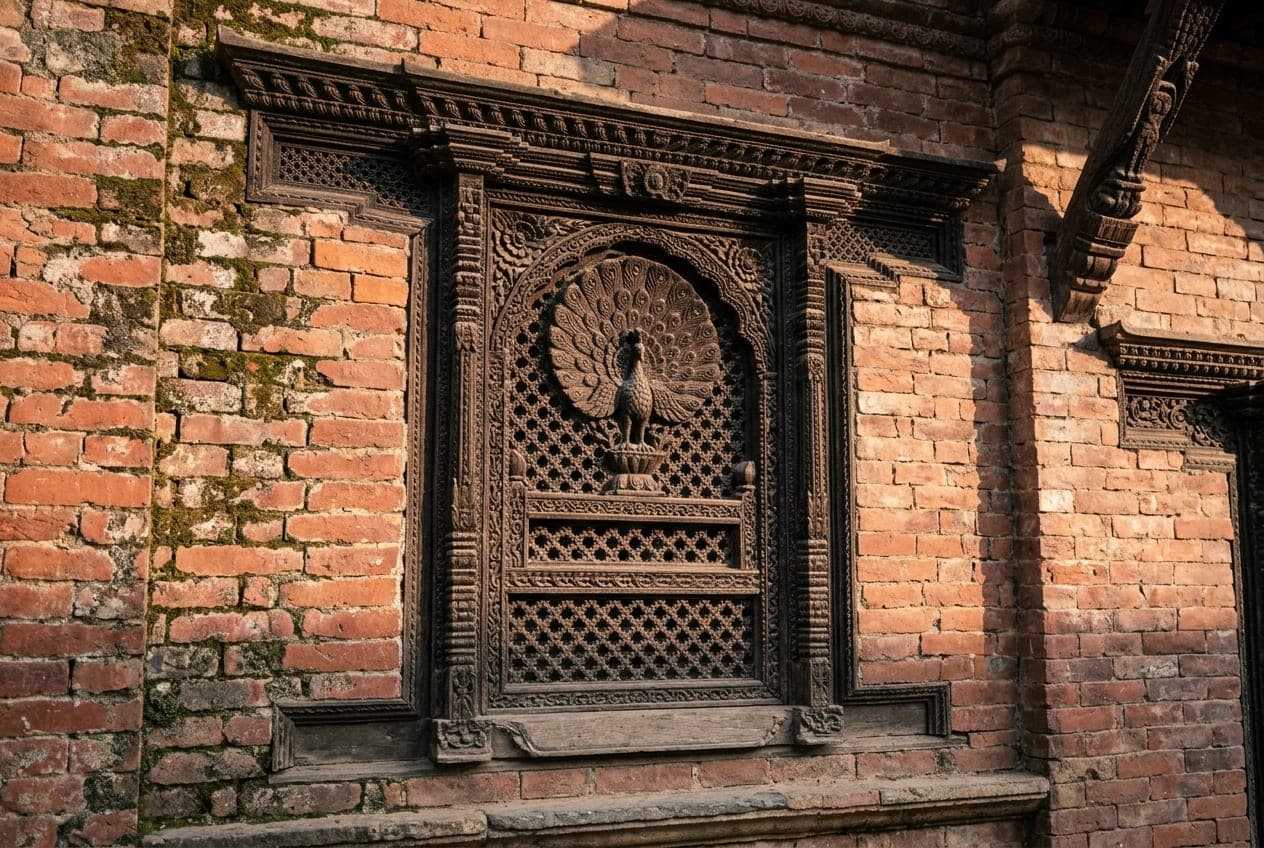
Our Newar Architecture Workshop runs over four days in Bhaktapur and Patan with a conservation architect. You walk and sketch the squares and courtyards, including the Nyatapola temple in Bhaktapur, built in 1702 and the tallest temple in the valley, and Patan's bahals, old Buddhist monastery courtyards where families still live. Sketching slows you down and makes you look; no drawing skill is needed. You learn to read a temple from plinth to pinnacle: the stepped base, the brick walls, the carved struts that hold up the wide eaves, and the roofs that shed the monsoon rain.
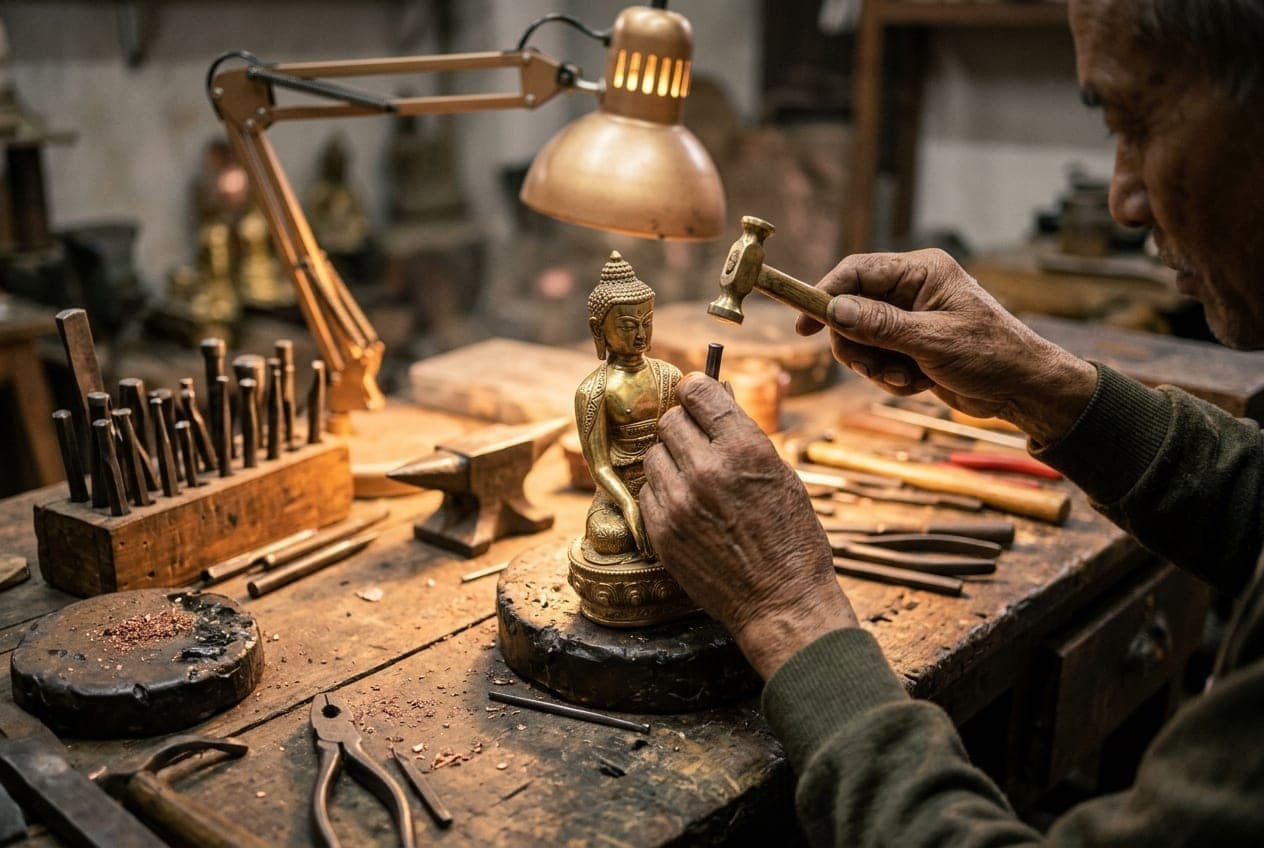
You also spend time with restoration craftsmen: masons who lay fine facing bricks, and carpenters who cut the pegged joints of temple frames. You try each technique on sample pieces under their guidance; the restoration itself is their work. On the last day the architect takes you to an active restoration project, which one depending on your dates.
Groups are 2 to 8 people. You stay three nights in guesthouses inside the old cities, with breakfast and lunch each day. Bring a camera too, but expect the sketchbook to teach you more. For a first look at the valley's monuments, start with the Kathmandu Valley heritage tour; to spend longer on one craft, add a wood carving workshop in Bhaktapur.
Architecture workshop journeys
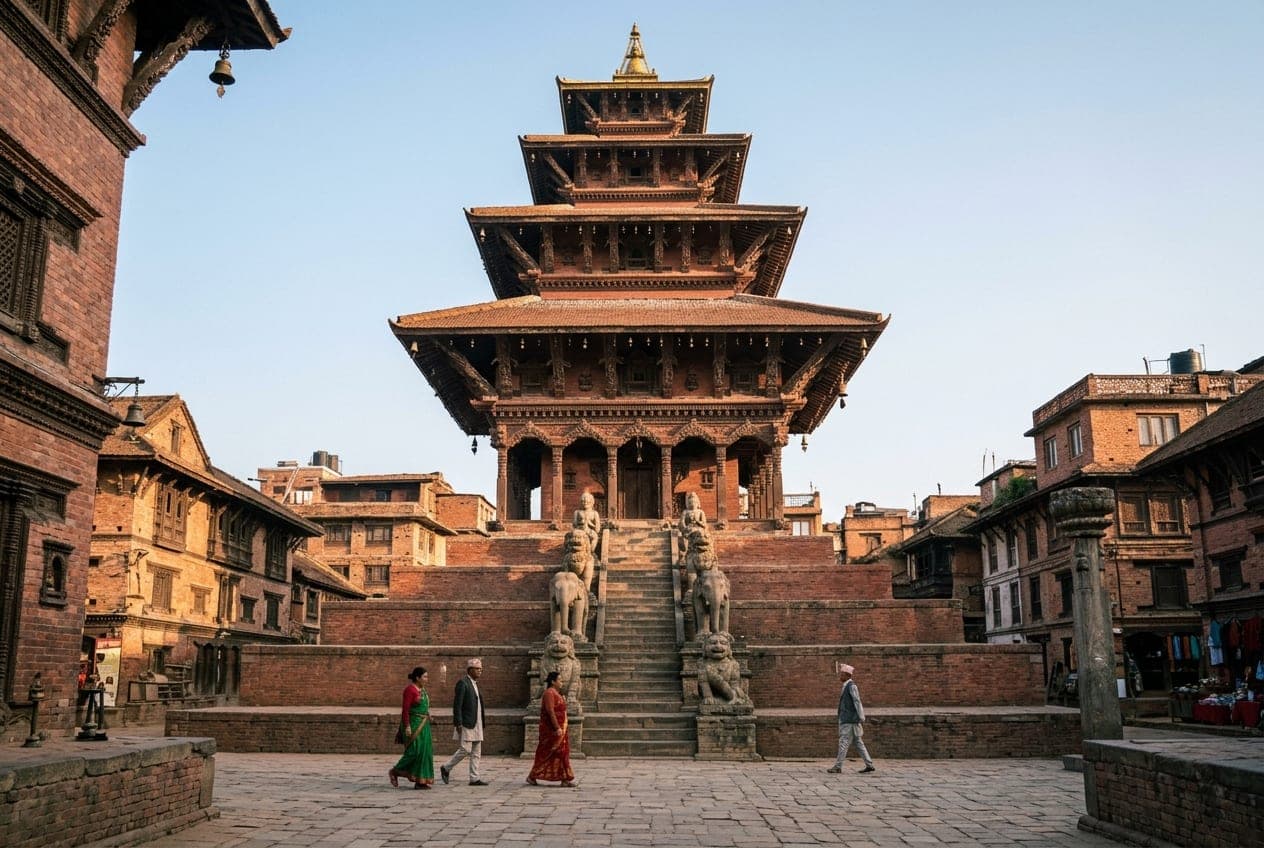
Newar Architecture Workshop
Best time to go
October to May. Autumn (October and November) is dry and clear, with good light for sketching. Winter days are cool and sunny, good for long hours outdoors, though mornings are cold. Spring is warmer, with Bisket Jatra in Bhaktapur in mid-April.
We don't run the workshop in the monsoon (June to mid-September), when rain makes outdoor sketching hard and some restoration work pauses.
What to expect
Expect a mix of walking, looking, drawing and doing. Mornings usually start with a walk or a site visit, followed by sketching; afternoons are with the craftsmen or free. You're on your feet for several hours a day, often on uneven brick paving.
On restoration sites you wear a helmet and follow the site team's instructions. Bring a hat, comfortable shoes and sun protection; the sketchbook and materials are provided.
Who it's for
Architects, students, engineers, conservationists, artists, and anyone who travels to look at buildings. The architect explains everything from first principles, so you don't need a professional background.
The workshop needs at least two people. It pairs well with a few days of carving or metal craft, or with a heritage tour first.
Frequently asked questions
Not at all. The conservation architect explains everything from first principles, and you don't need any drawing skill for the sketching sessions.
You practise each technique on sample pieces, such as a few courses of brick and a simple timber joint, guided by the craftsmen. The real restoration work is done by them; you learn how each piece fits into the building.
Bhaktapur's Durbar Square, Taumadhi Square and the Nyatapola temple; Patan's Durbar Square and its bahals; and an active restoration project in the valley, which one depending on your dates.
October to May. Autumn and winter bring clear, dry days for sketching outdoors, and we don't run it in the monsoon, from June to mid-September.
Yes, two travellers. Groups are at most eight, so everyone has time with the architect and the craftsmen.