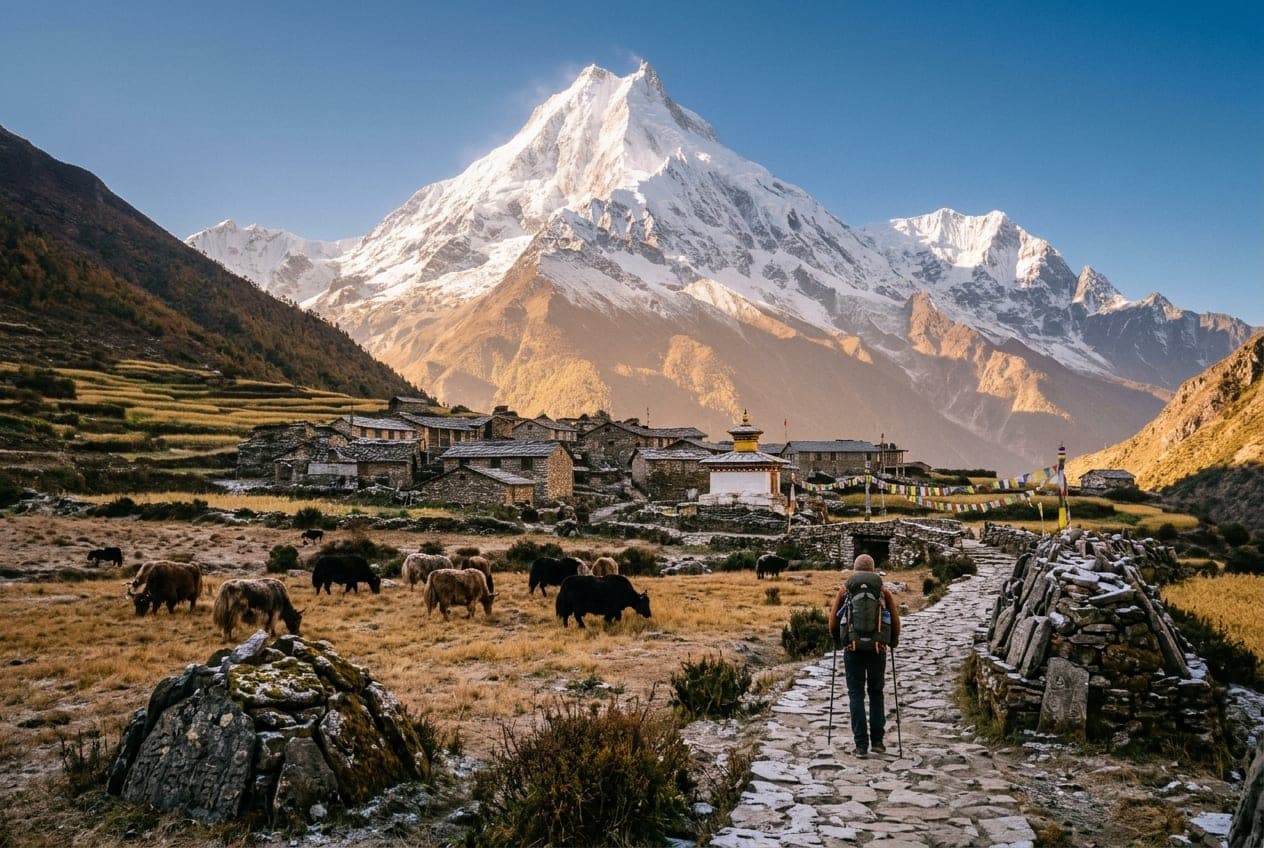
Everest Base Camp Trek
Trip info
- Tour style
Guided trek
- Starts in
Kathmandu
- Ends in
Kathmandu
- Best season
Mar–May, Sep–Nov
- Guide languages
English, Hindi
- Accommodation
Teahouses on the trek (11 nights)
- Meals
12 breakfasts, 11 lunches, and 11 dinners on the trek; farewell dinner in Kathmandu
- Group size
1–12 people
- Availability
Available all season
Overview
This is the classic Everest Base Camp trek in Nepal: fly to Lukla, then walk up the Khumbu valley through Sherpa villages to the foot of Everest (8,848.86 m). You spend 12 days on the trail, walking 3 to 7 hours a day, and sleep in family-run teahouses inside Sagarmatha National Park.
The route climbs slowly. We stop for an acclimatisation day in Namche Bazaar (3,440 m) and another in Dingboche (4,360 m), because gaining height gradually is the best protection against altitude sickness. On Day 8 you climb Kala Patthar (5,545 m) for a close view of Everest, Lhotse, and Nuptse, and on Day 9 you walk to Everest Base Camp (5,364 m) before descending to Pheriche.
A government-licensed English-speaking guide leads the trek, and porters carry your main bag, one porter for every two travellers (up to 12 kg per trekker). We arrange the permits, the Lukla flights, full-board meals on the trek, and a farewell dinner in Kathmandu. Lukla flights depend on the weather and are often delayed, so keep at least one or two spare days in Kathmandu before your flight home.
Places you'll see
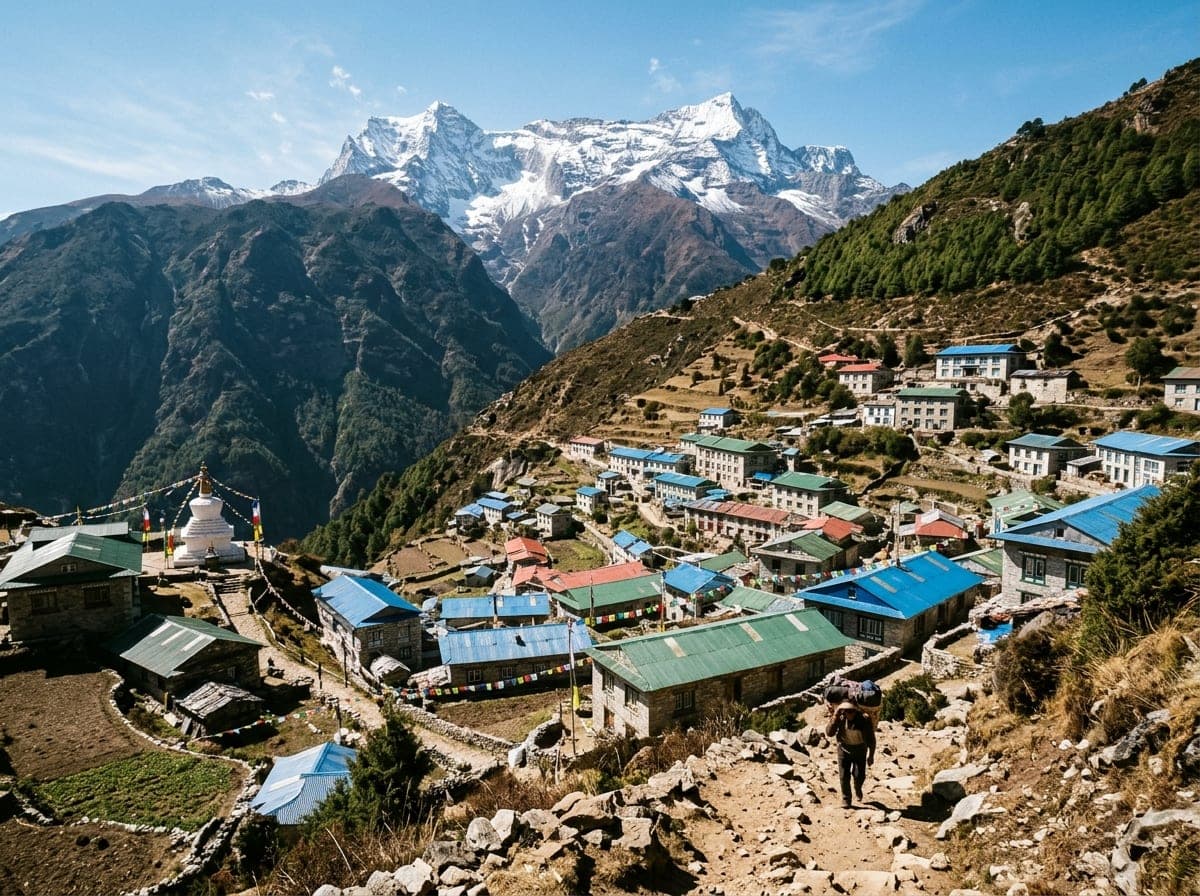 1 Namche Bazaar
The main Sherpa town of the Khumbu, built in a horseshoe on the hillside at 3,440 m. Two nights here for acclimatisation.
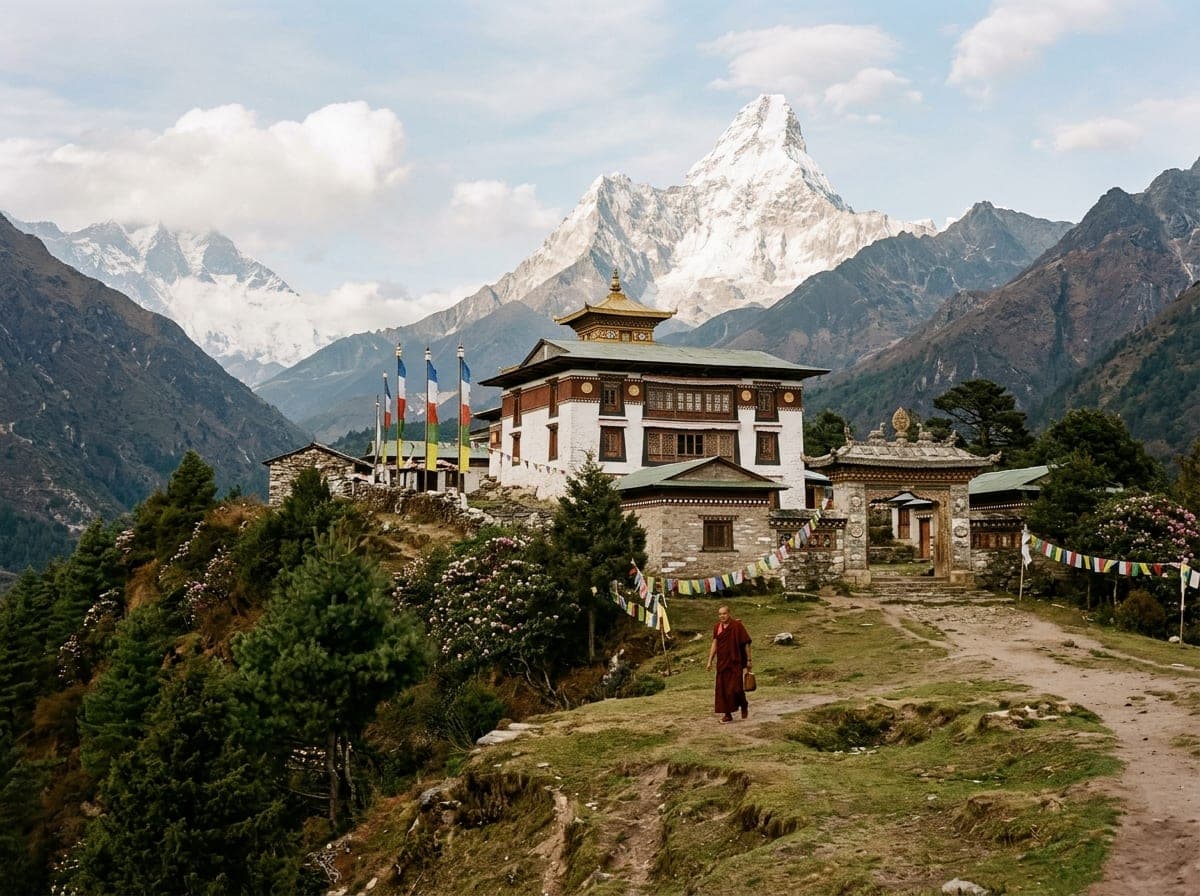 2 Tengboche Monastery
The Khumbu's best-known monastery, at 3,860 m, with Ama Dablam behind it. You stay the night here on Day 5.
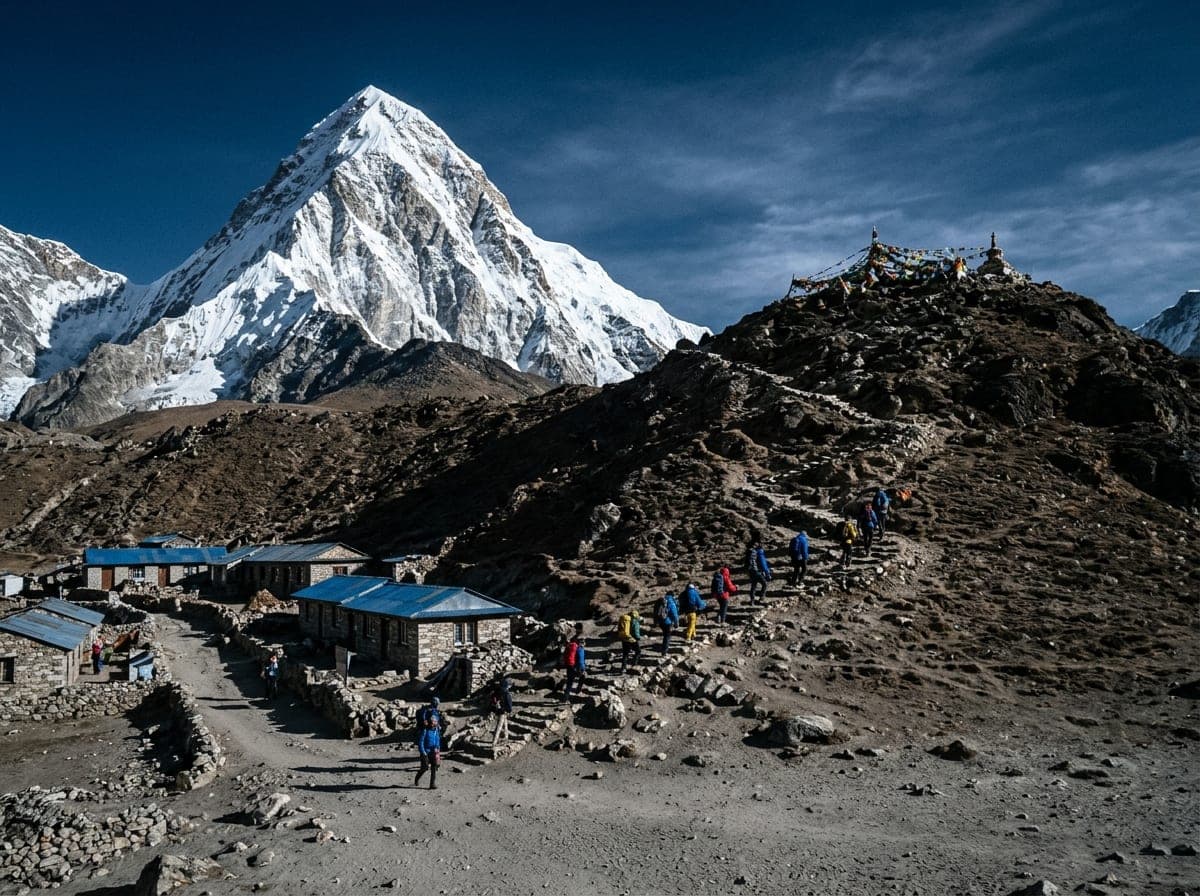 3 Kala Patthar
A rocky viewpoint at 5,644 m above Gorak Shep, climbed before dawn on Day 10 for a close view of Everest.
Highlights
- Everest Base Camp (5,364 m) and the Kala Patthar viewpoint (5,644 m)
- Acclimatisation days in Namche Bazaar and Dingboche
- Tengboche Monastery, with Ama Dablam behind it
- Mountain flight to Lukla (2,860 m)
- Nights in family-run teahouses
- Licensed guide, and one porter for every two travellers
What the price covers
Included
- Airport transfers on arrival and departure
- 2 nights in a Kathmandu hotel with breakfast (Days 1 and 13)
- Return flights to Lukla, from Kathmandu or Ramechhap depending on the season
- Road transfers between Kathmandu and Ramechhap when flights leave from there
- Licensed trekking guide and porters (one porter for every two travellers)
- Teahouse rooms and three meals a day on the trek (11 nights)
- Sagarmatha National Park permit and Khumbu Pasang Lhamu Rural Municipality entry permit
- First aid kit and pulse oximeter, carried by your guide
Not included
- International flights and Nepal visa fee
- Travel insurance covering trekking to 5,700 m and helicopter evacuation (required)
- Lunch and dinner in Kathmandu
- Drinks, snacks, hot showers, wifi and phone charging in teahouses
- Extra nights in Kathmandu, for example as a spare day for flight delays (available as an add-on)
- Tips for your guide and porters
Day by day
Day 01: Fly to Lukla, trek to Phakding
Overnight: Phakding, 2,650 mTake a short mountain flight from Kathmandu (about 40 min) or Manthali (about 20 min) to Lukla, then walk about 3 hours along easy riverside trails past Sherpa villages and prayer walls to Phakding.
Day 02: Phakding to Namche Bazaar
Overnight: Namche Bazaar, 3,440 mCross high suspension bridges over the Dudh Koshi river, enter Sagarmatha National Park at Monjo, and make a steep final climb into Namche Bazaar, the main Sherpa trading town (about 6 hours).
Day 03: Trek to Namche Bazaar
Overnight: Namche Bazaar, 3,440 mCross the river several times on suspension bridges, enter Sagarmatha National Park at Monjo, then climb steeply to Namche. On a clear day you see Everest for the first time on the way up. 5–6 hours, gaining about 800 m.
Day 04: Acclimatisation day in Namche
Overnight: Namche Bazaar, 3,440 mRest days still include a walk: we climb to the Everest View Hotel (about 3,880 m) for views of Everest and Ama Dablam, then come back down to sleep. 3–4 hours. The afternoon is free for Namche's shops and bakeries.
Day 05: Trek to Tengboche
Overnight: Tengboche, 3,860 mA level path round the hillside, a drop to the river at Phunki Tenga, then a long climb through forest to Tengboche Monastery. 5–6 hours. If the monastery is open to visitors, you can sit in on the afternoon prayers.
Day 06: Trek to Dingboche
Overnight: Dingboche, 4,410 mDown through forest to Deboche, across the Imja Khola and up past Pangboche into open yak pasture. 5–6 hours. Dingboche is a village of stone-walled fields below Ama Dablam.
Day 07: Acclimatisation day in Dingboche
Overnight: Dingboche, 4,410 mA morning climb up Nangkartshang hill behind the village, as high as you feel comfortable (the top is about 5,080 m), for views of Makalu, Lhotse and Ama Dablam. 3–5 hours, then back to Dingboche to rest.
Day 08: Trek to Lobuche
Overnight: Lobuche, 4,940 mAlong the wide valley to Thukla, then a steep climb to Thukla Pass, where memorials remember climbers who died on Everest. On to Lobuche beside the Khumbu Glacier. 4–5 hours.
Day 09: Gorak Shep and Everest Base Camp
Overnight: Gorak Shep, 5,164 mWalk beside the Khumbu Glacier to Gorak Shep (2–3 hours), leave your bags at the teahouse and continue to Everest Base Camp (5,364 m) and back, another 3–4 hours. It's the longest day at the highest altitude. You sleep at Gorak Shep, not at Base Camp.
Day 10: Kala Patthar at sunrise, descend to Pheriche
Overnight: Pheriche, about 4,250 mA pre-dawn climb up Kala Patthar (5,644 m), 1.5–2 hours up, for sunrise on Everest, Lhotse and Nuptse. Back to Gorak Shep for breakfast, then a long walk down to Pheriche. 7–8 hours in total.
Day 11: Trek to Namche Bazaar
Overnight: Namche Bazaar, 3,440 mDown the valley past Pangboche and Tengboche, then along the hillside path to Namche. 6–7 hours, mostly downhill, with a climb up to Tengboche and another after Phunki Tenga.
Day 12: Trek to Lukla
Overnight: Lukla, 2,860 mThe last day on the trail: down to the Dudh Koshi, back across the bridges and up to Lukla. 6–7 hours. A last evening with your guide and porters.
Day 13
Fly back to Kathmandu
Overnight: Kathmandu, 1,400 mA morning flight to Kathmandu, or to Ramechhap and a 4–5 hour drive. The afternoon is free. If cloud keeps planes on the ground, you wait in Lukla for the next flight, which is why a spare day before your flight home matters.
Departure
Ends in KathmanduTransfer to the airport for your flight home. If you've added extra nights, we take you on the day you leave.
How we run every journey
A small group
This journey takes 12 travellers at most.
Local people, fairly paid
Your guides, artisans and hosts live in Nepal, and we pay them fairly.
Care for the places we visit
We keep to the paths, carry our rubbish out and respect local customs.
Your peace of mind
Cancellation policy
Free cancellation up to 30 days before departure. 50% refund 15–29 days before. No refund within 14 days, but you can move your booking to another date once at no cost. Permit fees already paid to the government cannot be refunded.
Booking termsTraveller reviews
No reviews yet. If you have been on this journey with us, you can write one below.
Frequently asked questions
You walk 3–8 hours a day for 11 days, mostly up or down on rough stone trails, and above 4,000 m there is much less oxygen in the air. You don't need climbing skills, but you should be able to hike 5–6 hours with a day pack and feel fine the next day. Train for two to three months: long walks with hills, stairs and some cardio.
Two: the Sagarmatha National Park entry permit and the Khumbu Pasang Lhamu Rural Municipality entry permit. The Everest region does not use the TIMS card. Both permits are included and we handle the paperwork; send us a copy of your passport before you travel.
In the busy seasons (roughly March to May and October to November) most Lukla flights leave from Ramechhap (Manthali) airport, because of air traffic at Kathmandu. It's a 4–5 hour drive, so you leave Kathmandu in the middle of the night. At other times flights usually leave from Kathmandu. We confirm the airport once the airlines publish their schedule, and the road transfer is included.
Lukla flights need clear weather, and delays of a day or more happen in every season. If the flight in is delayed, your guide adjusts the itinerary; if the flight out is delayed, you wait in Lukla for the next one. That's why we recommend at least one spare day in Kathmandu before your international flight. When you book, we explain in writing how extra nights and any helicopter option are paid for.
The itinerary gains height slowly and includes two acclimatisation days. Your guide checks everyone's oxygen level and pulse each evening with a pulse oximeter and asks how you feel. If someone shows signs of altitude sickness, the reliable treatment is to go down, and a member of the team goes with them. Tell us about any medical conditions before you book.
We give it as 5,644 m, the long-standing figure. Some newer maps show 5,545 m. Either way it's the highest point of the trek, a steep 1.5–2 hour climb from Gorak Shep.
Yes. Your policy must cover trekking up to 5,700 m and emergency helicopter evacuation. We ask for your insurer's name, policy number and emergency phone number before the trek starts.
Choose your dates and send a booking request on this page. No payment is taken online. We check guides, permits, flights and rooms, then confirm your trip in writing and send an invoice. We confirm the deposit and balance dates in writing when you book.
Related journeys
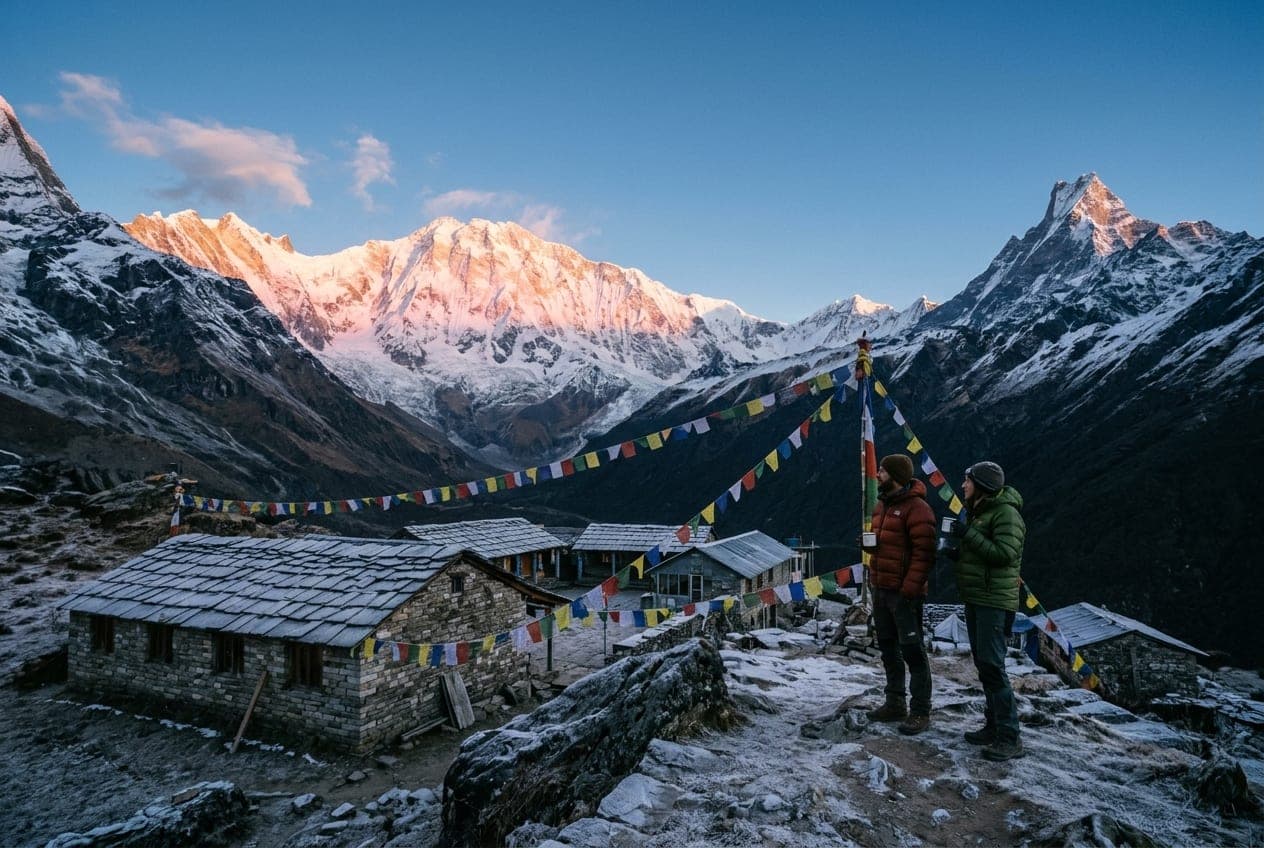
Annapurna Base Camp Trek
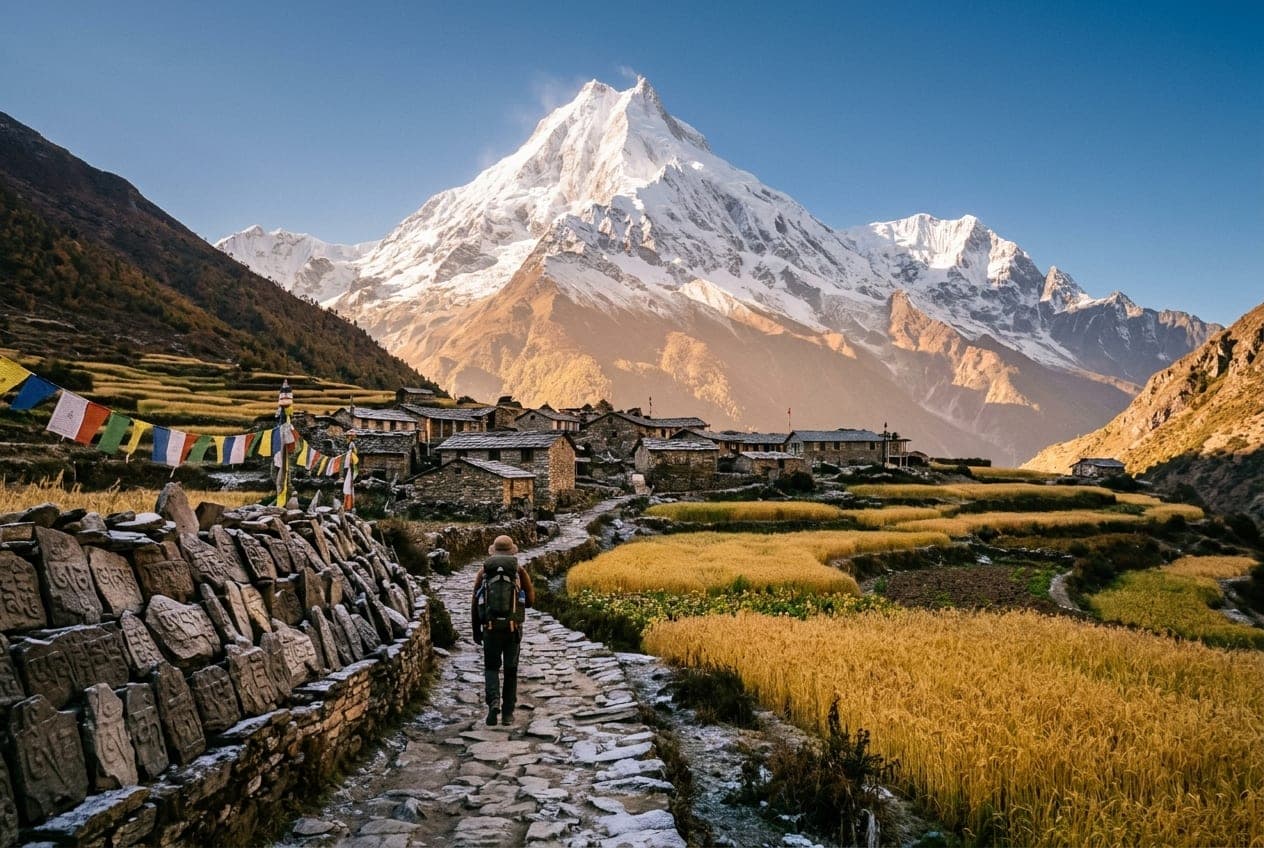
Manaslu Circuit Trek