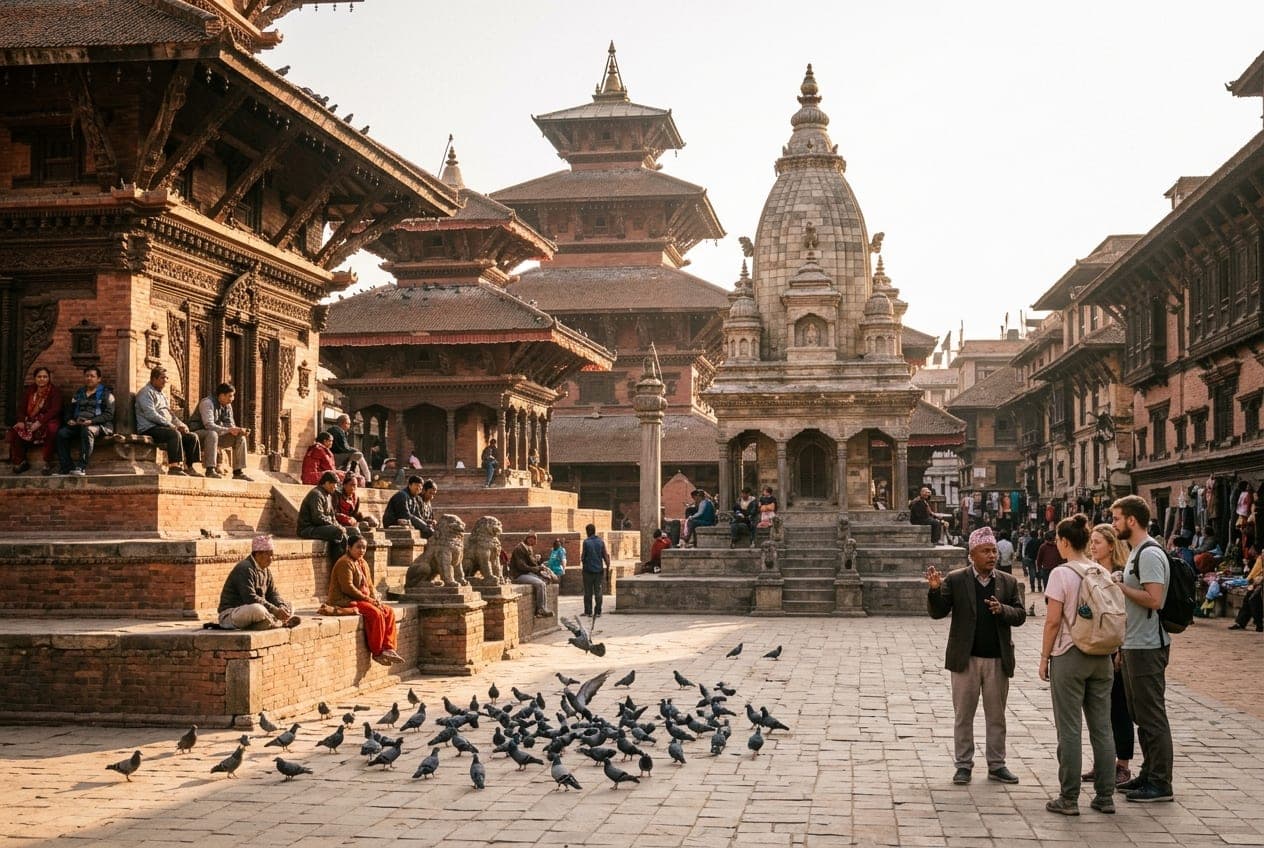
Newar Architecture Workshop
Trip info
- Tour style
Hands-on workshop
- Starts in
Bhaktapur
- Ends in
Patan
- Best season
Oct–May
- Guide languages
English
- Accommodation
Guesthouses in Bhaktapur (2 nights) and Patan (1 night)
- Meals
Breakfast and lunch daily
- Group size
2–8 people
- Availability
Available all season
Overview
Newar builders designed and built the temples, palaces and courtyards of the Kathmandu Valley. Their tiered-roof temples combine brick walls set in mud mortar, timber frames held together with pegged joints, and carved roof struts, and many have been repaired after earthquakes, most recently in 2015. In the 13th century a Newar craftsman, Araniko, took these skills to the court of Kublai Khan, where he built the White Stupa that still stands in Beijing.
On this Newar architecture workshop a conservation architect shows you how to read these buildings: plinth, walls, struts and roofs, and why some came through earthquakes while others fell. You sketch in the squares and courtyards of Bhaktapur and Patan, and spend time with restoration craftsmen trying their techniques: laying fine facing bricks and cutting a timber joint.
To be clear about what that means: you practise on sample pieces, guided by the craftsmen; the restoration itself is their work. Groups are 2 to 8 people, with three nights in guesthouses in Bhaktapur and Patan, and breakfast and lunch each day.
Places you'll see
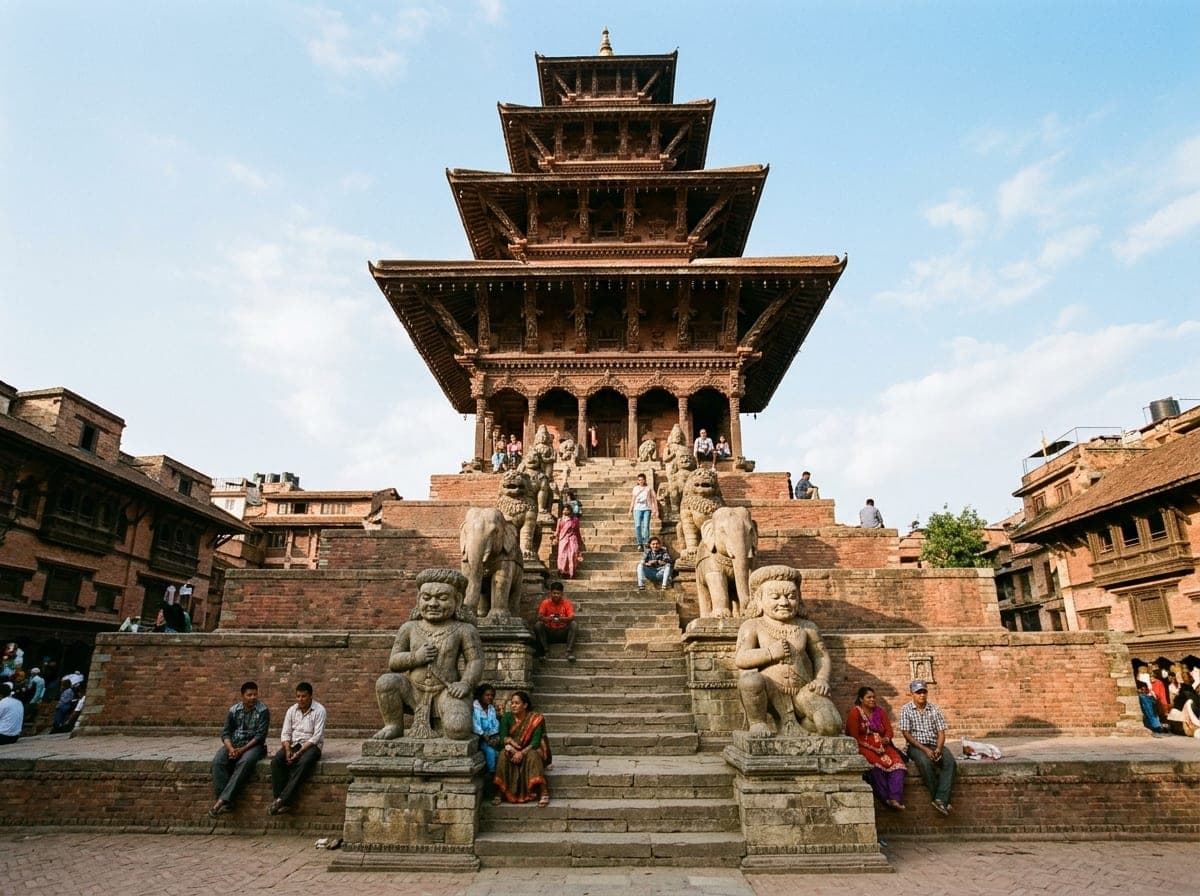 1 Nyatapola
A five-roofed temple in Bhaktapur's Taumadhi Square, built in 1702 and the tallest temple in the valley.
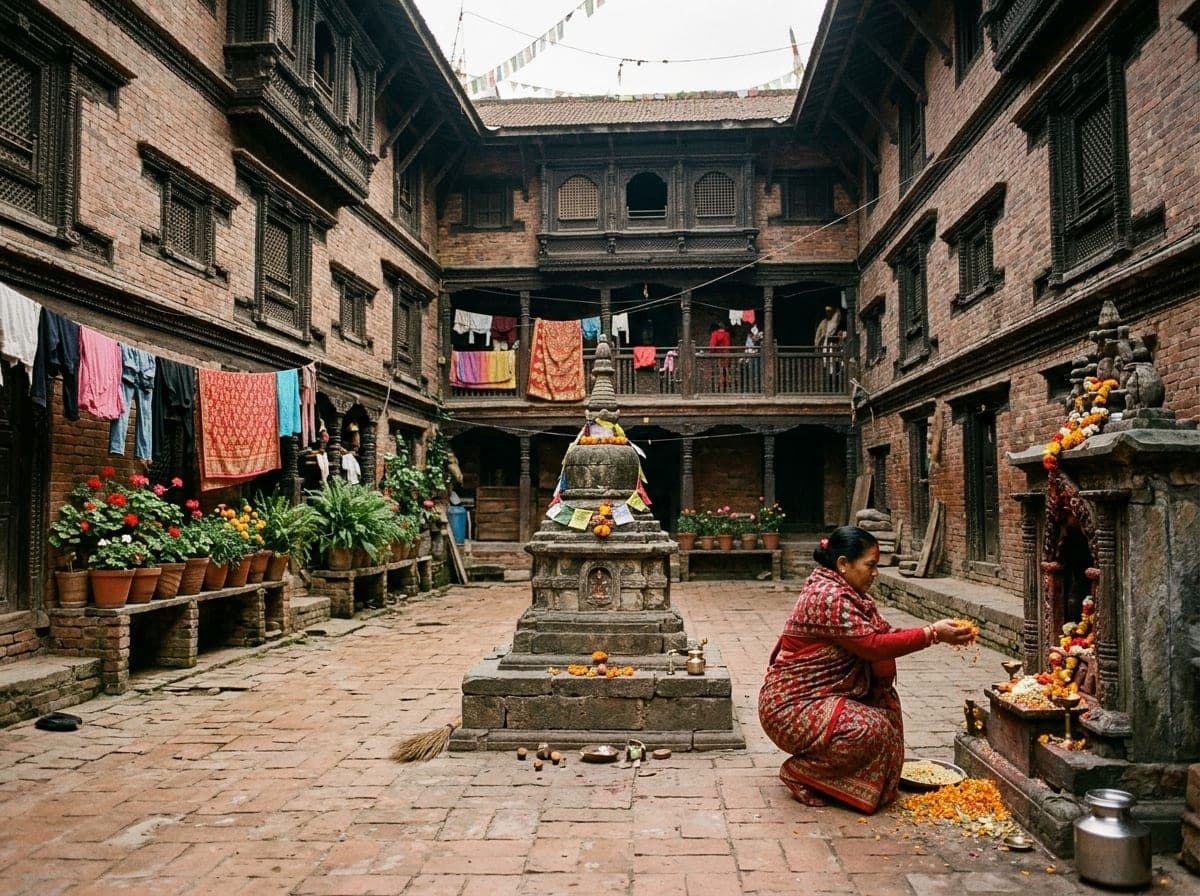 2 Patan courtyards
Bahals and bahis: old Buddhist monastery courtyards, many of them still lived in.
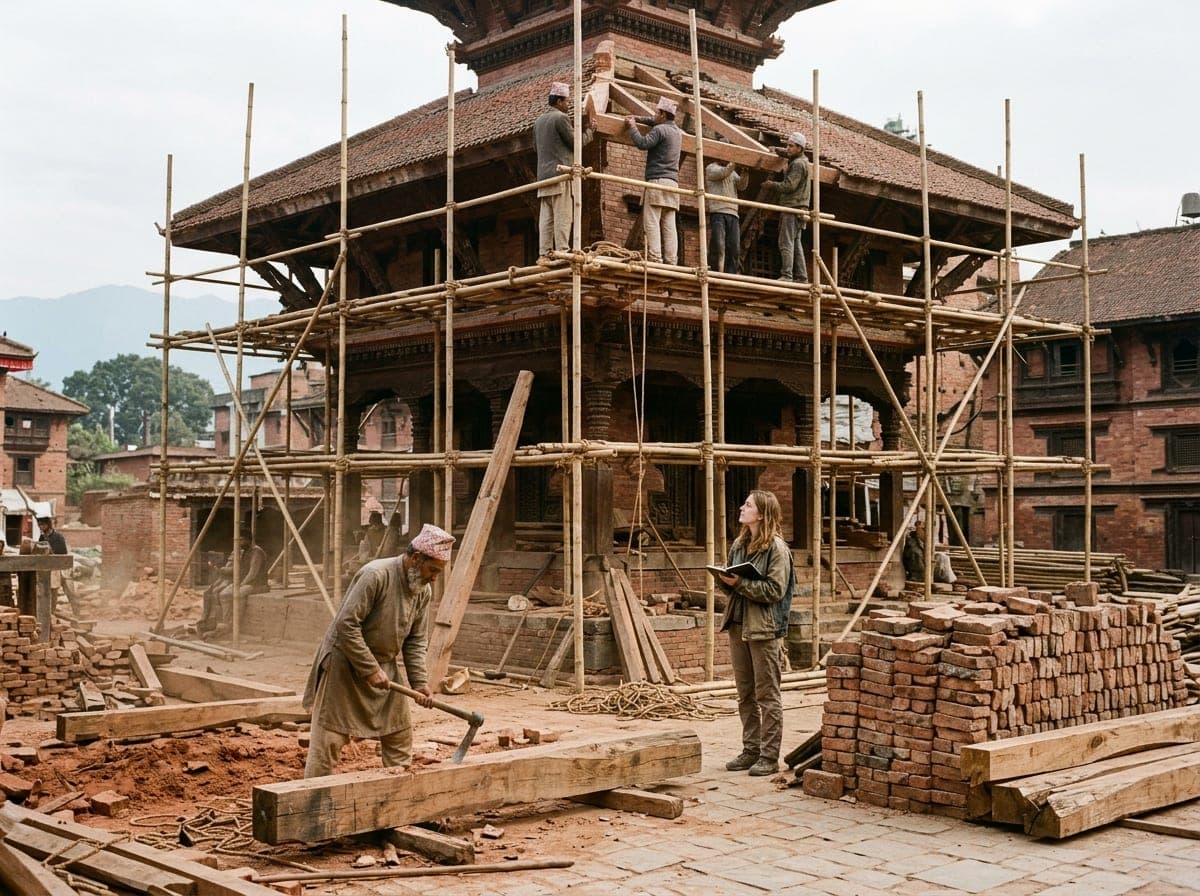 3 Restoration site
An active restoration project in the valley; which one depends on your dates.
Highlights
- Learn to read a Newar temple with a conservation architect
- Sketching sessions in the squares and courtyards of Bhaktapur and Patan
- Try brickwork and timber joinery with restoration craftsmen
- Nyatapola, the valley's tallest temple (1702)
- A visit to an active restoration project
- Groups of 2 to 8
What the price covers
Included
- Conservation architect for all four days
- Sessions with restoration masons and carpenters
- Materials, sketchbook and pencils
- 3 nights in guesthouses in Bhaktapur and Patan, with breakfast
- Lunch each day
- Transfer from Bhaktapur to Patan on Day 3
- Entry fees for Bhaktapur and Patan
Not included
- Transfers from Kathmandu or the airport (airport pickup available as an add-on)
- Dinners and drinks
- Travel insurance
Day by day
Day 01: Reading a Newar city
Overnight: BhaktapurMeet your architect in Bhaktapur at 9 am. Walk Durbar Square, Taumadhi Square and the Nyatapola temple, looking at how plinths, walls, struts and roofs work together. Afternoon sketching in a courtyard.
Day 02: Brick and mortar
Overnight: BhaktapurA morning with masons: how traditional bricks are made and laid, and how fine facing bricks give Newar facades their sharp lines. You practise laying a few courses on a sample wall. Afternoon sketching.
Day 03: Timber joinery in Patan
Overnight: PatanMove to Patan. With restoration carpenters, see how temple frames are joined with pegged mortise-and-tenon joints, and cut a simple joint yourself. The afternoon is in Patan's bahals, the old monastery courtyards where families still live.
Day 04: A restoration site
Ends in PatanVisit an active restoration project in the valley with your architect, then go through your sketchbook together over lunch. The workshop ends mid-afternoon.
How we run every journey
A small group
This journey takes 8 travellers at most.
Local people, fairly paid
Your guides, artisans and hosts live in Nepal, and we pay them fairly.
Care for the places we visit
We keep to the paths, carry our rubbish out and respect local customs.
Your peace of mind
Cancellation policy
Free cancellation up to 14 days before. 50% refund 7–13 days before. No refund within 7 days.
Booking termsTraveller reviews
No reviews yet. If you have been on this journey with us, you can write one below.
Frequently asked questions
No. The architect explains everything from first principles. Architects, engineers and students get more technical detail if they ask for it.
You practise each technique on sample pieces: a few courses of brick and a simple timber joint. The real restoration work is done by trained craftsmen; you watch, ask questions and try the techniques alongside them.
It depends on which projects are active when you travel, and we tell you which one before your trip. On site you wear a helmet and follow the site team's rules.
Not quite. Traditional temples rely mainly on pegged timber joints and brick set in mud mortar, but iron fittings were used too, and some restorations add discreet modern reinforcement. The architect will show you where.
Yes, two people. Groups are at most eight, so everyone gets time with the architect and the craftsmen.
Choose your dates and send a booking request on this page. No payment is taken online. We check the architect, the craftsmen and the guesthouses, then confirm your trip in writing and send an invoice. We confirm the deposit and balance dates in writing when you book.
Related journeys
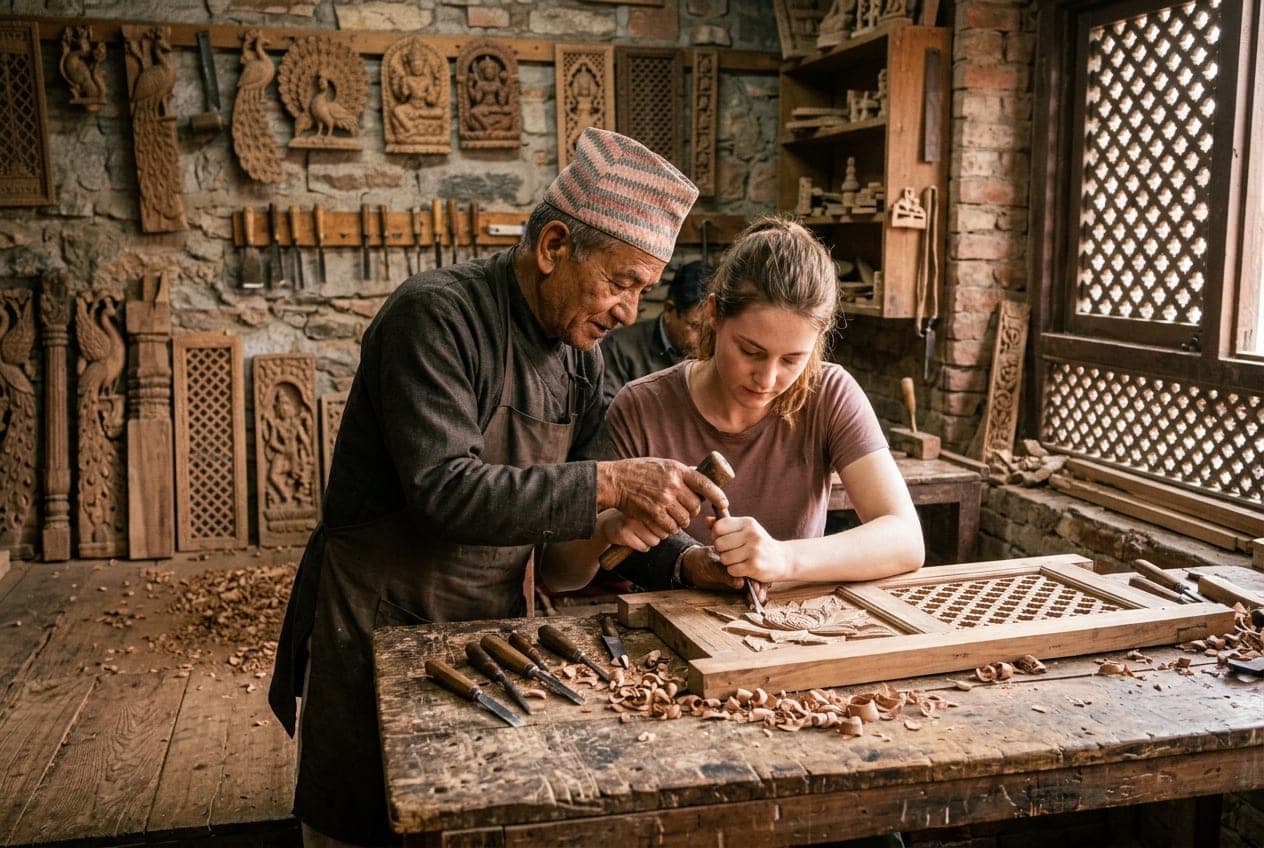
Wood Carving Workshop in Bhaktapur
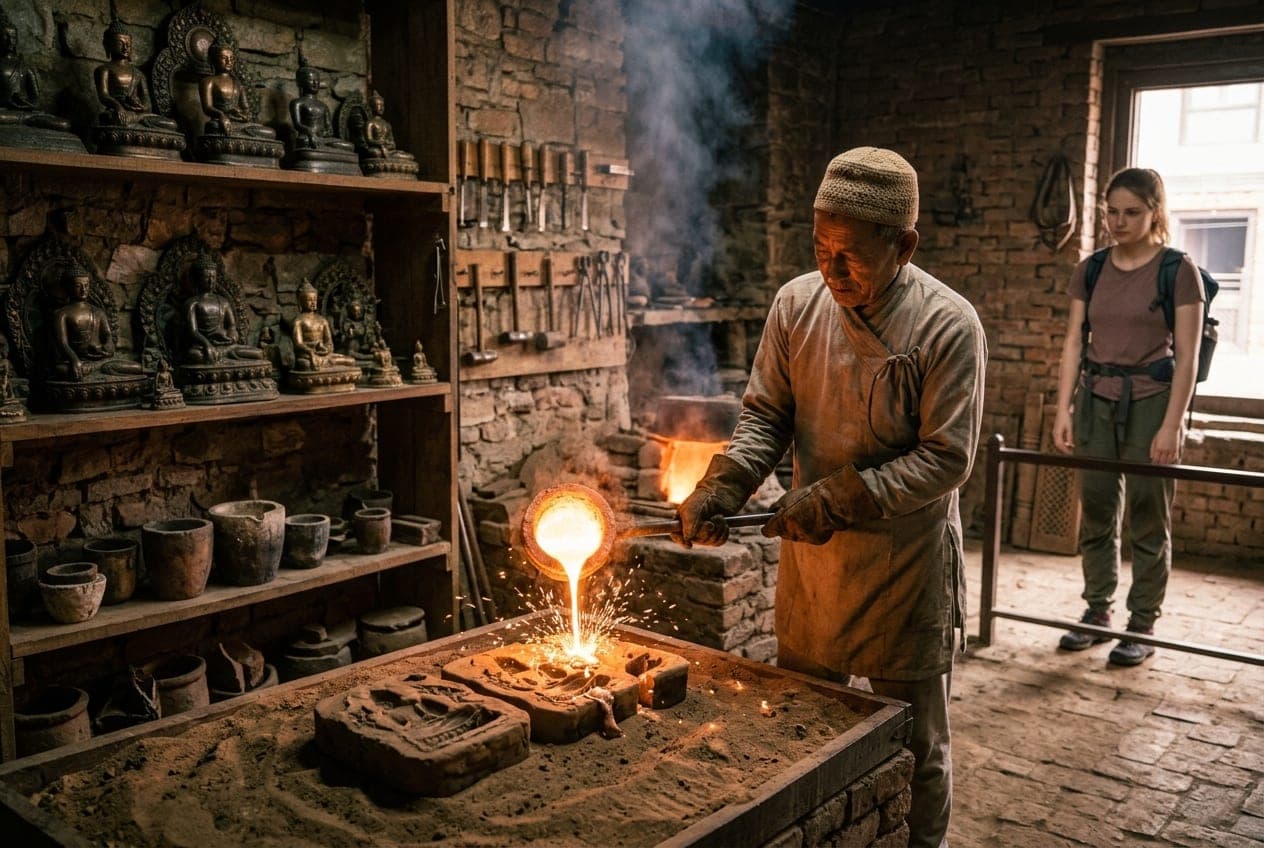
Metal Craft Workshop in Patan