Dal bhat power, 24 hour: Nepal's everyday meal
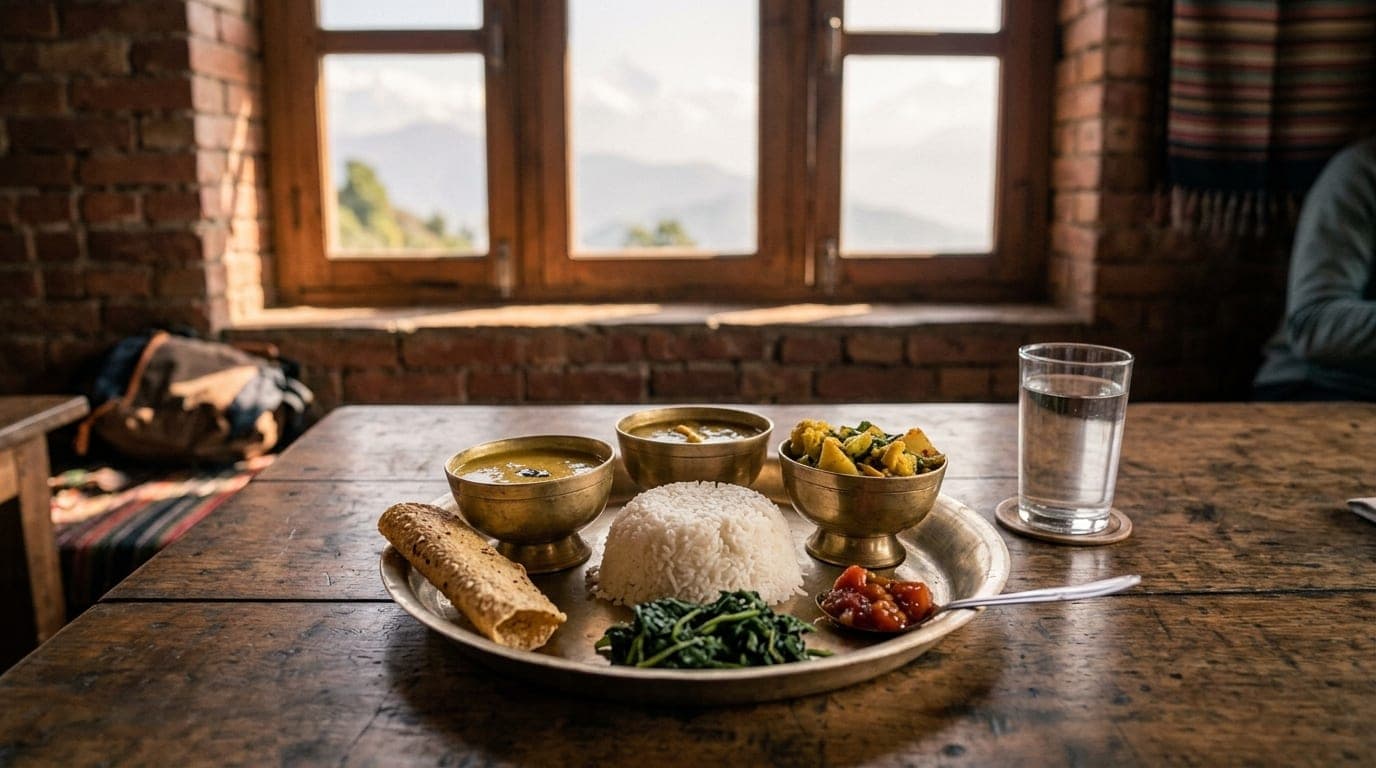
What's on a plate of dal bhat, how to eat it with your hand, why refills are free on the trail, and the Newar dishes to look for in the Kathmandu Valley.
If you spend more than a day in Nepal, you'll eat dal bhat. It's the meal most Nepali families eat twice a day, and on the trekking trails it's the one dish every teahouse cooks. The T-shirts in Thamel say "Dal bhat power, 24 hour", and after a week of walking you'll understand why.
What's on the plate
Dal bhat is a set meal, usually served on one large steel plate:
- Bhat: boiled rice, the base of the meal.
- Dal: lentil soup, usually thin, poured over the rice. It can be yellow or made from black lentils.
- Tarkari: a vegetable curry of potato, cauliflower, beans or whatever is in season.
- Saag: stir-fried greens, often mustard leaves or spinach.
- Achar: a pickle or chutney, from fresh tomato and sesame to fermented radish. Small amounts, strong flavour.
- Sometimes: a meat curry (chicken, goat or buffalo), papad, curd, or a wedge of lime and a raw chilli.
In the hills you may be served dhido instead of rice: a thick paste of millet, buckwheat or maize flour, eaten with the same dal and greens.
How to eat it
Most Nepalis eat dal bhat with their right hand. Pour some dal over part of the rice, mix in a little tarkari or achar, gather a small ball with your fingers and push it into your mouth with your thumb. Use only your right hand for food; the left is considered unclean. Places used to visitors will always offer a spoon if you'd rather. Wash your hands before and after: there's usually a tap or a jug of water nearby.
Why refills are free
In homes and most teahouses, dal bhat comes with refills of rice, dal and vegetables at no extra cost. The cook or host comes round with the pots until you put your hand over the plate. On a trek that makes it the most filling meal on the menu for the money, and it's what guides and porters eat. It's cooked fresh in big batches from local ingredients, which also makes it a sensible choice for your stomach.
Dal bhat on the trail
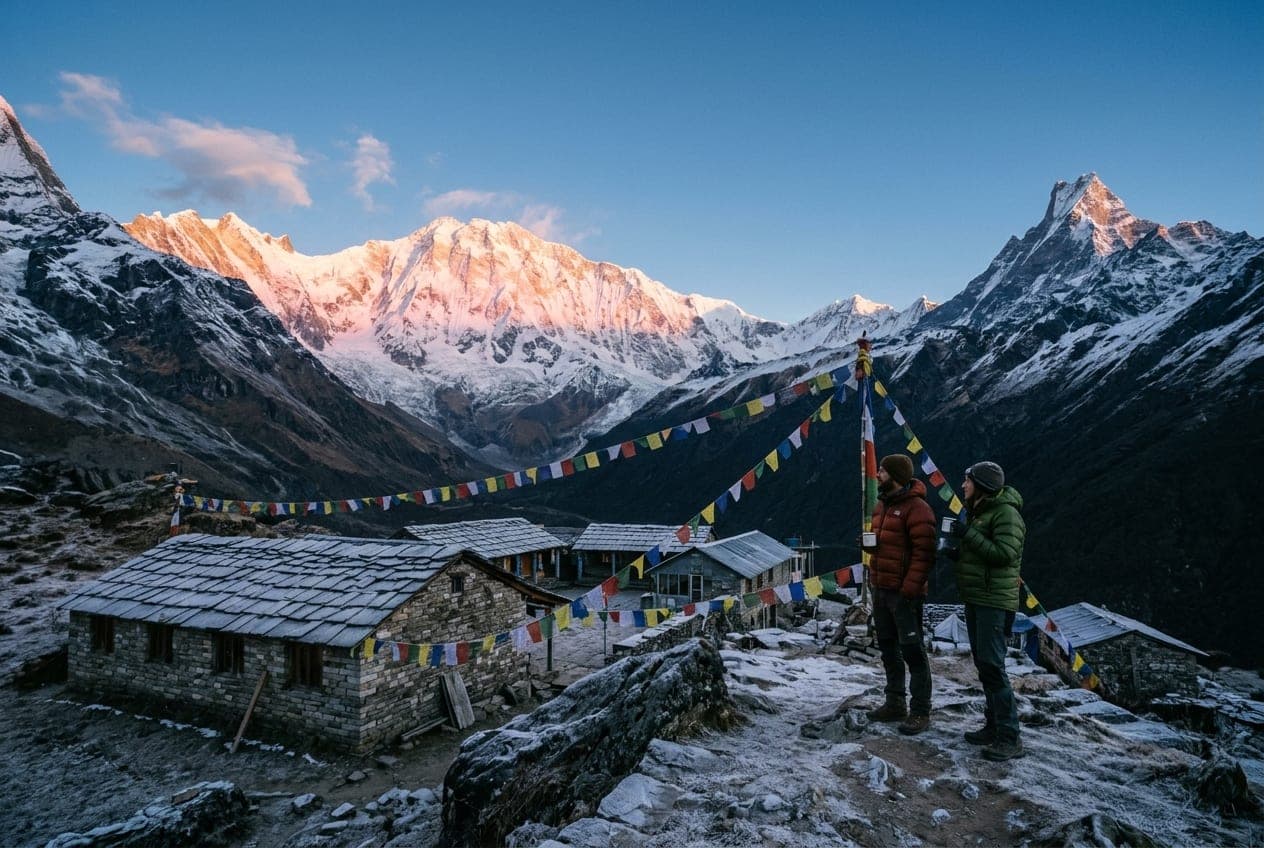
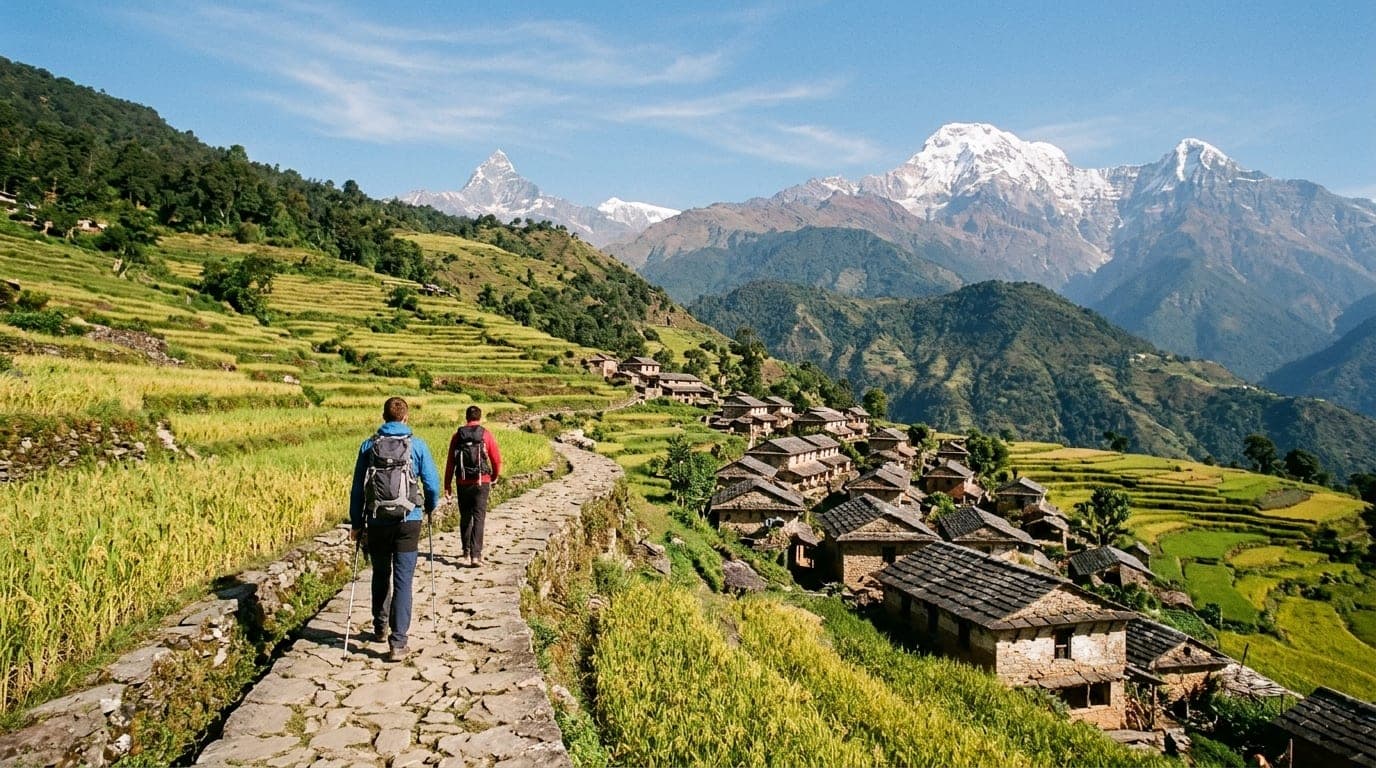
At altitude your appetite often drops, but you still need carbohydrates and fluid, and dal bhat gives you both. Many trekkers eat it once a day, usually at dinner, and switch to noodle soup, fried rice, porridge or Tibetan bread at other meals. Prices rise the higher you go, because everything is carried up by porters or pack animals. In some areas, lodge committees set a standard menu and price list for the teahouses.
Newar food in the Kathmandu Valley
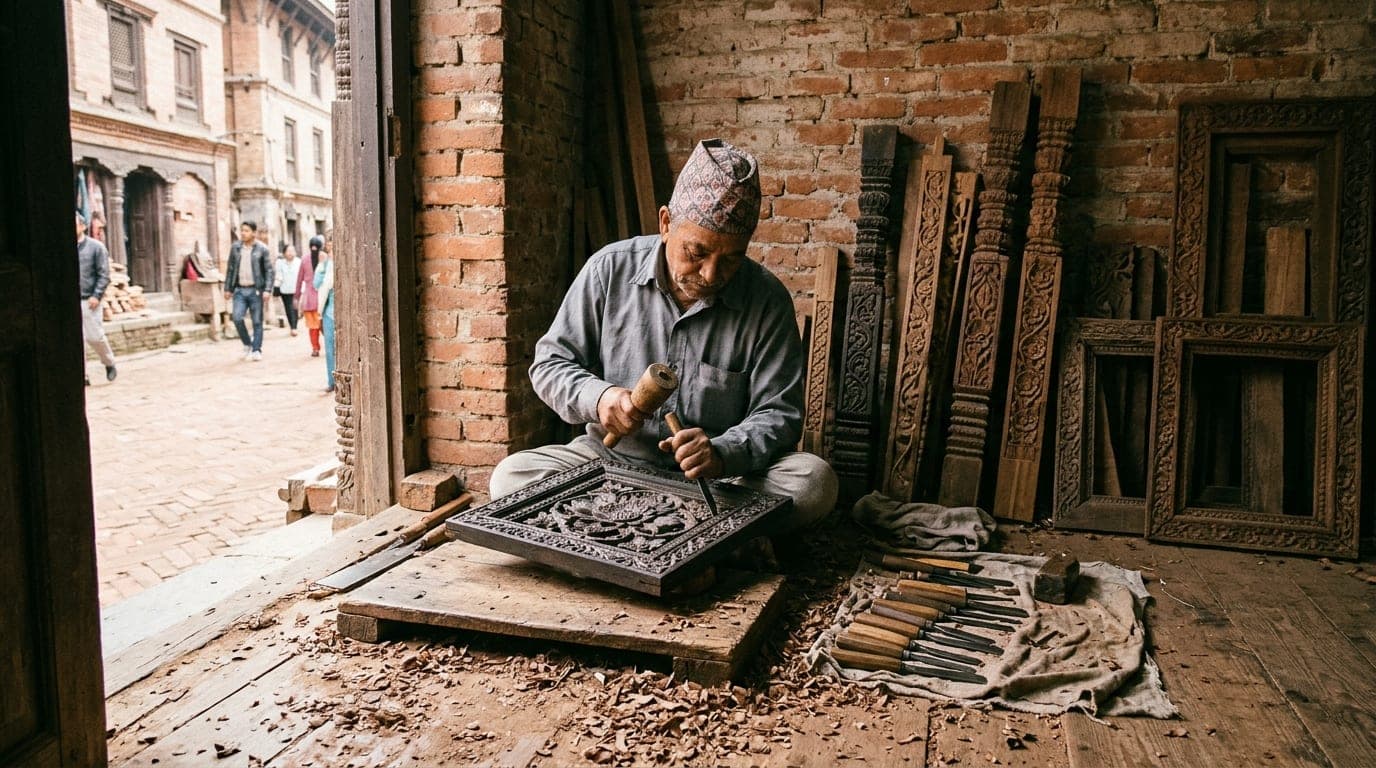
The Newar people of the Kathmandu Valley have their own cuisine, quite different from everyday dal bhat. Dishes to look for:
- Samay baji: a festival plate of beaten rice (chiura) with spiced buffalo, black soybeans, boiled egg, ginger and a lentil patty.
- Bara: a savoury pancake of ground black lentils, plain or topped with egg or minced meat.
- Chatamari: a thin rice-flour pancake with toppings, sometimes called Newari pizza.
- Choila: buffalo meat grilled over a flame and dressed with mustard oil, garlic and chilli.
- Yomari: a steamed rice-flour dumpling filled with molasses and sesame, made for the Yomari Punhi festival in December.
- Juju dhau: Bhaktapur's thick, sweet yoghurt, set in clay pots. The name means "king of curds".
Where to try it
You don't need a well-known restaurant. Small local eateries all over Kathmandu serve dal bhat at lunchtime; look for places busy with local workers. In Patan and Bhaktapur, small Newari snack houses (khaja ghar) serve bara, chatamari and samay baji in the afternoon, and in Bhaktapur juju dhau is sold in clay bowls from small shops around the squares.
On our Kathmandu Valley heritage tour, the two included lunches are Newari meals: one in a local kitchen in Patan and one in a family home in Bhaktapur. Our food add-ons include an evening food walk through Kathmandu's old bazaars and a home cooking session where you cook dal bhat with a Newar family.
A few tips
- Achar can be very hot. Try a little first.
- Say "pugyo" (enough) or cover your plate with your hand when you've had enough.
- Vegetarians eat well: dal bhat is vegetarian unless you ask for meat.
- On treks, meat is carried up from below, often without refrigeration, so many trekkers eat vegetarian once they're beyond the last road.
Journeys to read about, then live
Everest Base Camp Trek