What to pack for Everest Base Camp
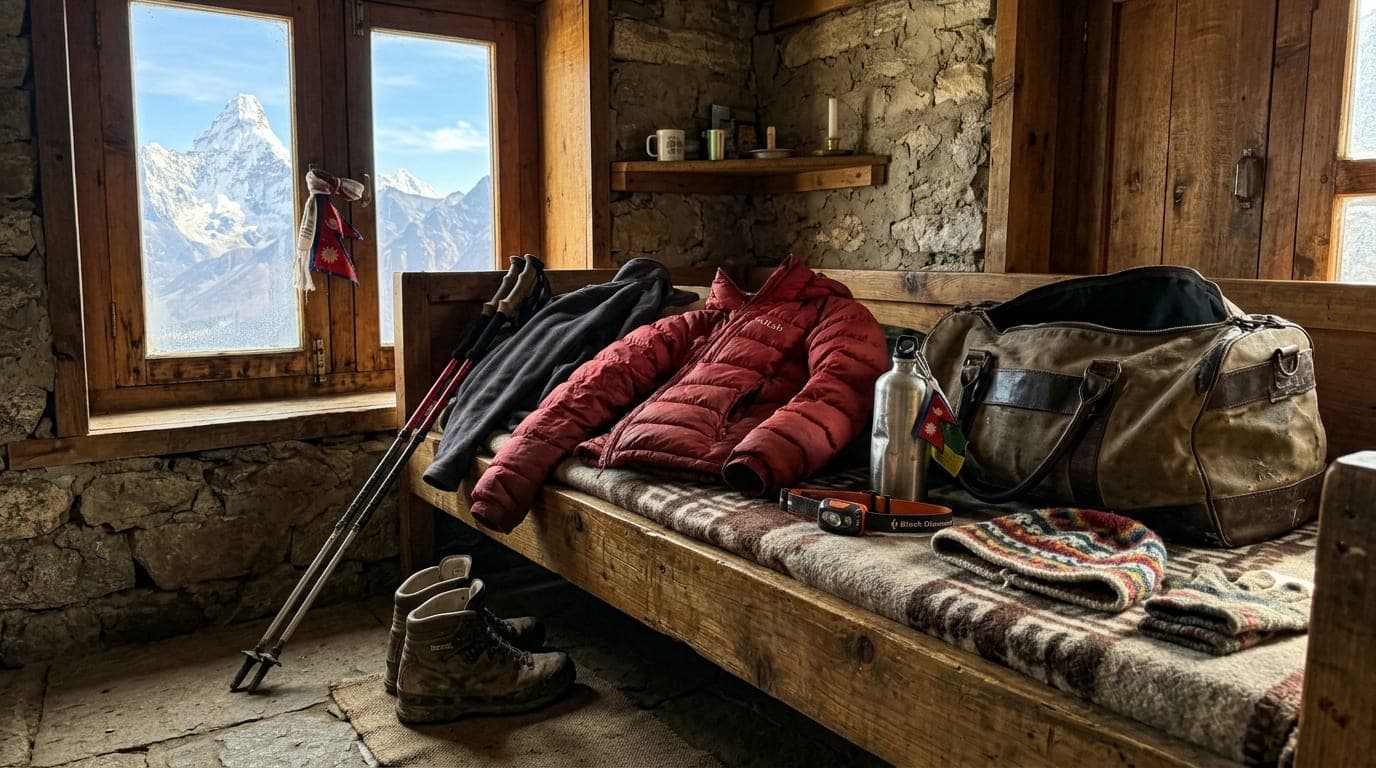
A practical kit list for the Everest Base Camp trek: layers for freezing mornings, boots, sleeping bag, first aid, documents, and what to rent in Kathmandu.
On the Everest Base Camp trek you go from mild afternoons in Phakding (2,610 m) to nights well below freezing at Gorak Shep (5,164 m) in about a week. Packing well means layers that cover that whole range, and not much else: a porter carries your main bag, shared between two travellers, so keep yours to about 10 kg.
How your gear is carried
You carry a day pack of 25–35 litres with water, snacks, layers, sun protection and anything else you need during the day. Your main bag, ideally a soft duffel, goes with the porter, and you won't see it until the evening. Leave anything you don't need on the trek at your Kathmandu hotel; hotels usually store bags for trekkers.
Lukla flights have a weight limit of 15 kg per person, including hand luggage, so pack to that from the start.
Clothing: the layer system
- Base layers: two thermal tops and one pair of thermal leggings, merino or synthetic, not cotton.
- Trekking tops: two or three quick-dry T-shirts or long-sleeved shirts.
- Mid layer: a fleece jacket or warm pullover.
- Insulation: a down jacket warm enough for −15 °C mornings. You can rent one in Kathmandu.
- Shell: a waterproof, windproof jacket and waterproof over-trousers.
- Trousers: two pairs of trekking trousers.
- Head and hands: sun hat, warm hat, a buff or neck gaiter, thin liner gloves, and insulated gloves or mittens.
- Feet: three or four pairs of trekking socks, and one warm pair kept for sleeping.
- Evenings: a clean set of clothes for the teahouse, and light shoes or sandals.
Footwear
Bring waterproof trekking boots with ankle support, and walk at least 50 km in them before you come: most blisters on the trail come from new boots. Gaiters help in snow but aren't essential in the main seasons.
Sleeping
Teahouses provide a bed, a pillow and a blanket, but rooms aren't heated and blankets vary. Bring or rent a sleeping bag with a comfort rating of about −10 °C, and a liner for warmth and hygiene. Earplugs help, because teahouse walls are thin.
In your day pack
- Two 1-litre water bottles, or a bottle and a hydration bladder (bladder tubes can freeze higher up).
- Water purification tablets, drops or a filter bottle. Teahouses sell boiled water; avoid buying plastic bottles.
- Sunglasses with UV protection (category 3 or 4), sunscreen (SPF 50) and lip balm with SPF.
- Snacks such as energy bars, nuts and chocolate. You can buy them on the trail, at higher prices.
- A head torch and spare batteries, for the pre-dawn climb up Kala Patthar.
- Trekking poles (you can rent these too).
- Toilet paper and hand sanitiser.
- A small power bank. Charging in teahouses costs extra and gets more expensive higher up.
First aid and health
Your guide carries a group first aid kit and a pulse oximeter, but bring your own basics: plasters and blister dressings, painkillers such as paracetamol and ibuprofen, oral rehydration salts, diarrhoea treatment, throat lozenges, and any personal medication with a copy of the prescription. Talk to your doctor well before you travel about vaccinations for Nepal and about acetazolamide (Diamox) for altitude.
Documents and money
- A passport valid for at least six months, and a Nepal visa (available on arrival at Kathmandu airport).
- Copies of your passport and travel insurance policy. We arrange the trekking permits.
- Travel insurance that covers trekking to at least 5,700 m and helicopter evacuation.
- Cash in Nepali rupees for the trail. There are ATMs in Lukla and Namche, but they don't always work, so bring enough from Kathmandu.
What you can rent in Kathmandu
Down jackets, sleeping bags and trekking poles are easy to rent in Kathmandu for a few dollars a day, and our trekking gear rental add-on covers all three. Rented gear is fine for a two-week trek. Boots are the one thing you should never rent. Kathmandu also sells plenty of cheap copies of branded gear: fine for a buff or a fleece, less reliable for a waterproof shell.
What to leave behind
Jeans, cotton T-shirts, heavy books, spare camera lenses you won't use, and anything valuable you'd hate to lose.
After you book our Everest Base Camp trek, we send a full packing list, and your guide goes through your gear with you in Kathmandu the evening before you fly to Lukla.
Journeys to read about, then live
Everest Base Camp Trek